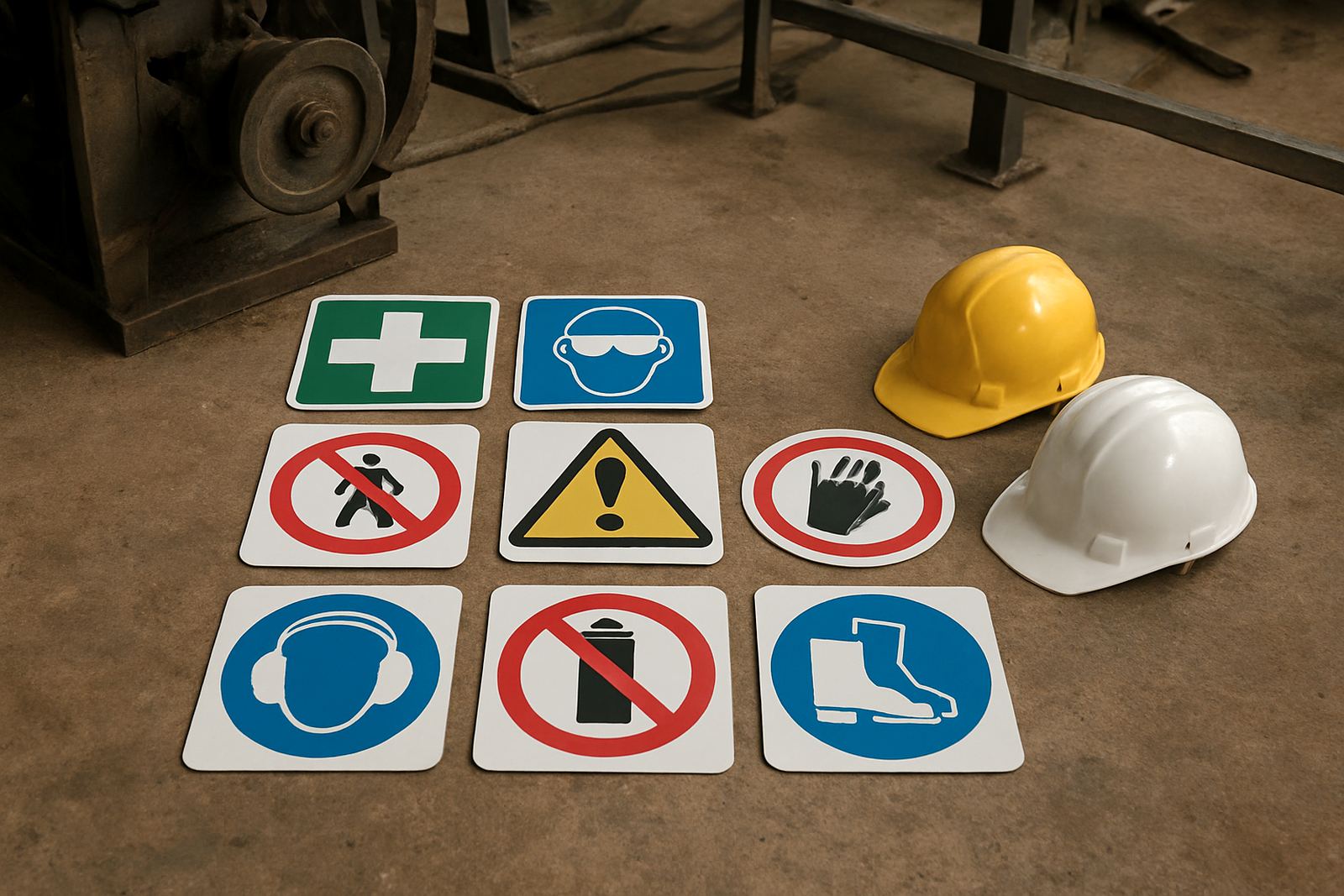

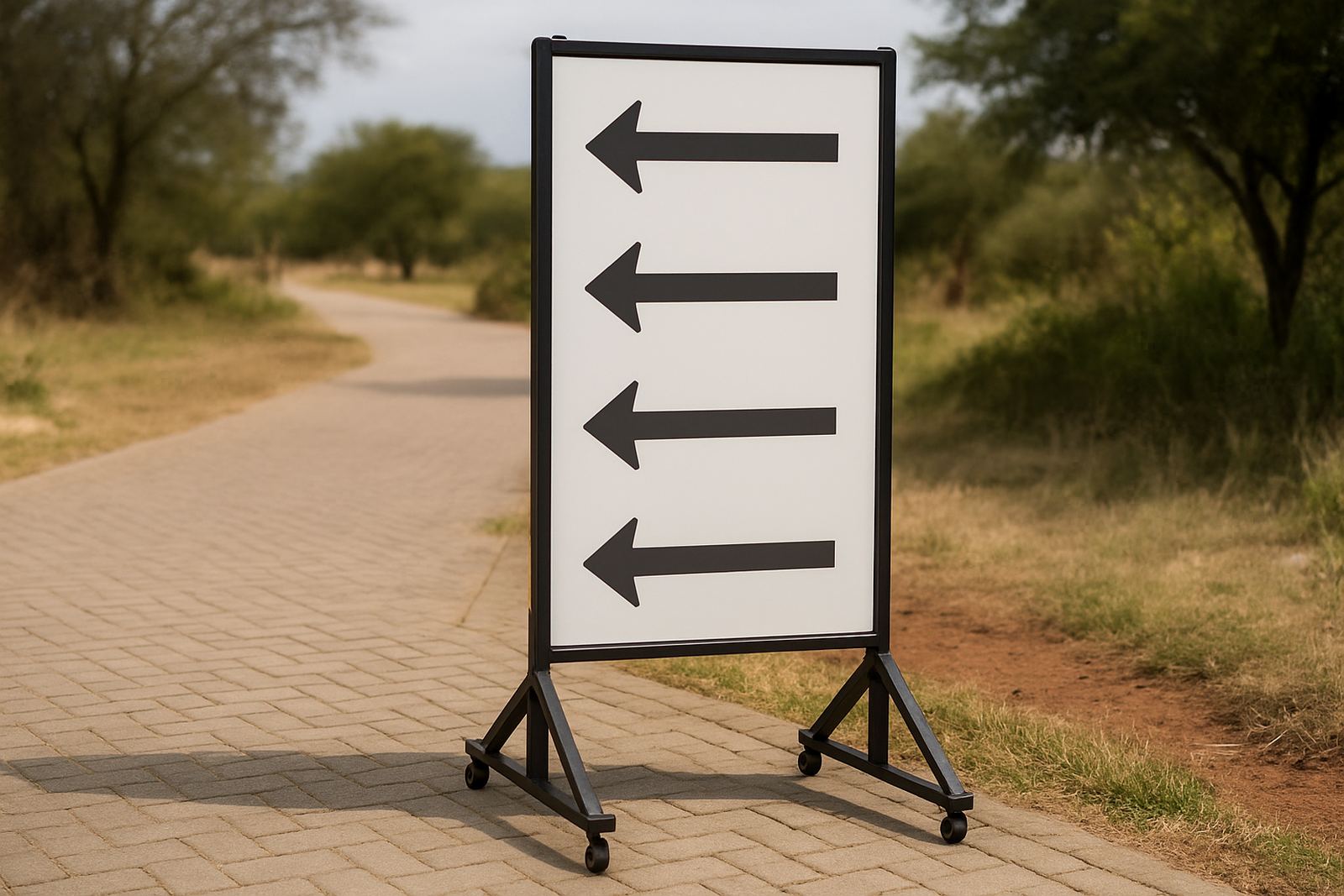
What directional signs are used for
Directional signs are the simple, practical boards that guide people from one point to another. They point visitors to reception, parking, security, loading zones, clinics, classrooms, workshops, ablutions and emergency exits. On mine sites and larger facilities they also help control traffic flow and reduce time wasted by drivers and pedestrians looking for the correct route.
In Rustenburg and surrounding areas, we often supply directional signs for places where people arrive under pressure, like school grounds before the bell, site entrances with delivery trucks, or event venues with temporary traffic changes. A good sign is clear at a glance, with the arrow, wording and placement doing the work. It should not need long reading or guesswork.
We produce directional signs in formats that suit permanent sites and short-term use. For outdoor areas, the sign face is made to handle sun, dust and wind. For indoor corridors or reception areas, we can keep the finish neater and lighter, with mounting suited to walls, doors or posts.
Sizes, materials and layout options
Directional signs can be made in many sizes, depending on viewing distance and where they will be fixed. A small arrow plaque at a doorway may be around 300 x 100 mm, while a roadway sign or campus direction board may run from 600 x 300 mm to 1200 x 600 mm or larger. For high traffic routes, bigger faces are better because drivers need to read them from a moving vehicle.
Common material options include:
- ACM or composite board for outdoor durability and a clean flat finish
- PVC board for lighter duty indoor and semi-outdoor use
- Aluminium sheet for long service life and reduced rust risk
- Corflute for temporary event use, parking control or short runs
- Acrylic panels for reception areas and neat internal wayfinding
We also help with arrow direction, numbering, colour coding and the order of information. If a site has more than one route, the wording should be kept consistent. For example, use the same terms for blocks, gates, bays or departments across all signs so people do not get confused. A tidy layout makes the whole system easier to follow.
Where directional signs work best
Directional signs are useful anywhere people need to move quickly and safely through a property. They are common on school campuses, private clinics, churches, industrial yards, warehouses, estates and mines. They also work well at sporting events, exhibitions, festivals and roadside functions where traffic patterns change for a day or two.
Typical uses include:
- Entrance and exit directions
- Parking, drop-off and loading bay guidance
- Reception, security and visitor office wayfinding
- Workshop, store room and admin block directions
- Emergency routes, muster points and safety points
- Temporary event arrows and crowd flow control
For Bojanala sites that get wind, dust or heavy vehicle movement, the sign position matters as much as the print. A sign placed too low can be blocked by parked vehicles or grass. One placed too high may be missed by people on foot. We can assist with sensible sizing and placement so the board is seen from the right approach angle.
Installation, mounting and site needs
Directional signs are a fixed printed product, so they normally do not need power or gas on site. They are a printed and mounted solution, so the main requirement is a solid fixing point and a safe location. Depending on the site, we can mount signs to walls, poles, fences, gates, gates posts or existing frames. If a new support structure is needed, we can advise on the best option for the area and the expected wind load.
When a sign is going outdoors in Rustenburg heat or in dusty mine conditions, it must be fixed properly. Loose fittings let the board rattle, tilt or crack over time. We check whether the surface is brick, steel, timber or concrete before deciding on screws, clamps or bracket mounting. For temporary event use, cable ties or quick-release fittings may be enough, but for permanent wayfinding we recommend more secure hardware.
If the location has municipal or site access rules, the board should not block walkways, fire routes or vehicle sight lines. On busy premises, it is also useful to keep the height and style consistent across the whole property so visitors can follow the route without stopping at every corner.
Care, cleaning and long term servicing
Directional signs are low maintenance, but they still need basic care if you want them to stay readable. Outdoor dust, rain marks and sun exposure can dull a sign face over time, especially near roads or open yards. For signs used around Rustenburg roads, yards and entrances, routine cleaning is usually just a soft cloth, mild soap and clean water. Avoid harsh solvents or rough scourers, as these can scratch the surface or lift print edges.
For sites with strong sun or coastal humidity, it helps to inspect the sign now and then for edge lifting, faded areas or loose fasteners. Replacing one faded arrow is better than leaving a whole route unclear. If the layout changes, we can remake only the affected panels so the system stays tidy and cost effective.
For temporary signs, store them flat and dry after use. Keep them out of direct heat and do not stack heavy items on top. That small bit of care keeps the board straighter and ready for the next event or shutdown period.
What to check before you order
Before you place an order, it helps to gather the basic details so we can set up the sign correctly the first time. The wording, arrow direction, size and fixing point all matter. If you are managing a campus, site or event, a simple route plan or sketch can save time and prevent wrong turns later on.
Please check these points before sending your request:
- Exact wording and spelling for each destination
- Arrow direction for each sign face
- Size needed based on how far the sign must be seen
- Indoor or outdoor use, and whether it is temporary or permanent
- Mounting method, such as wall, post, fence or hanging fix
- Colour preferences, numbering and any logo or site marking
If there are different departments, gates or blocks, keep the names consistent across all signs. A small spelling difference can confuse visitors and drivers. If you are not sure about the layout, we can help you sort the route order before production starts. That way the final set is practical and easy to read.
Key facts
| Product type | Directional and wayfinding signs with arrows, route text and location labels |
|---|---|
| Common sizes | 300 x 100 mm up to 1200 x 600 mm and larger, depending on viewing distance |
| Material options | ACM, aluminium, PVC board, corflute and acrylic |
| Finish options | Printed face, cut vinyl lettering, matt or gloss lamination |
| Mounting options | Wall fix, post mount, fence mount, bracket mount or temporary tie-on |
| Use environment | Indoor, outdoor, temporary event use, campuses, industrial sites and facilities |