
Start with the site: where people arrive, stop and look
Before you order anything, walk the site and note where people enter, where queues form and where the main viewing points are. In Rustenburg and the wider Bojanala area, events often deal with strong sun, dust, afternoon wind and uneven ground, so the layout matters as much as the print itself. A display that looks neat on paper can disappear if it is placed too low, too far back or in the wrong direction.
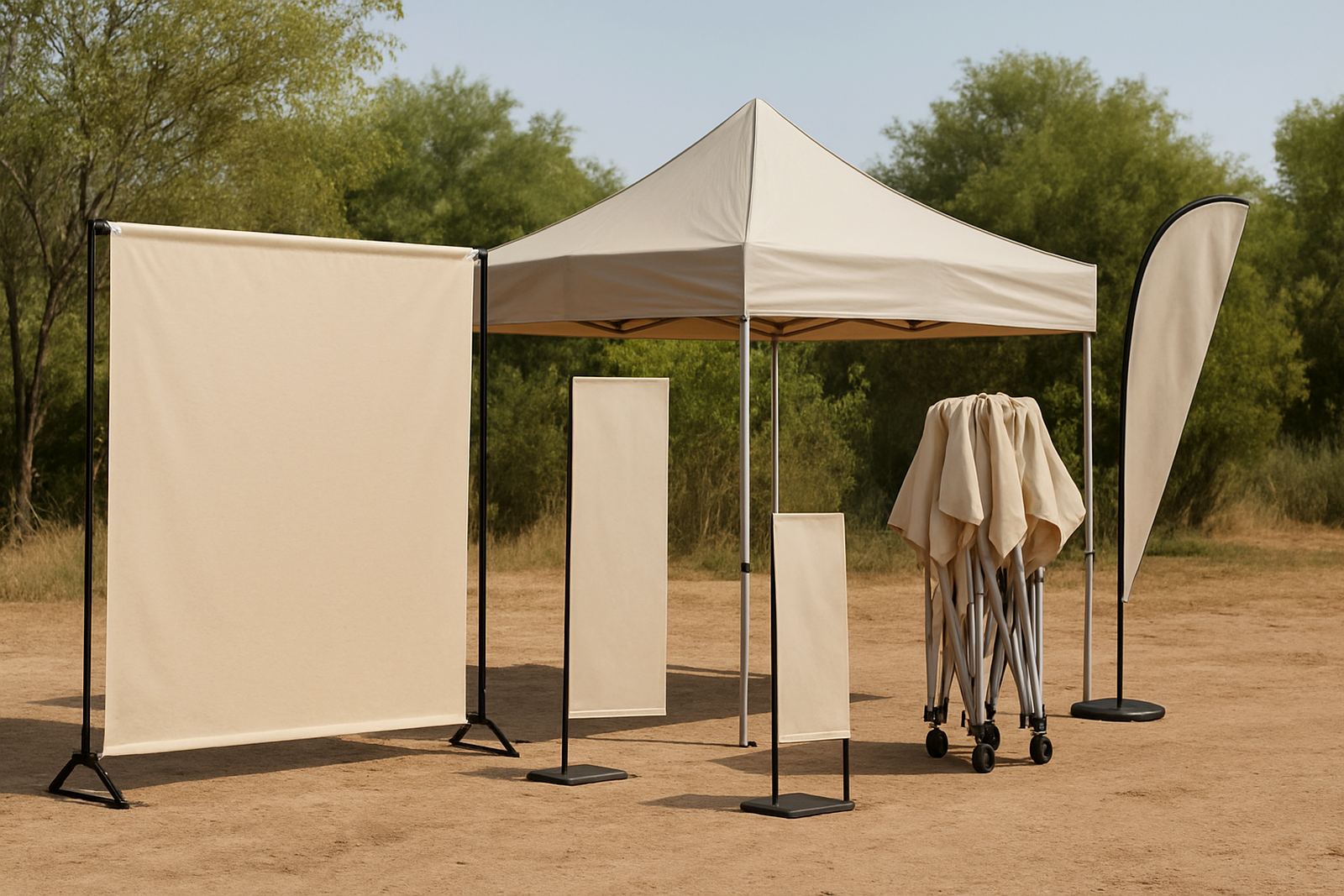
Think in three zones. The first is the arrival zone, where a banner or flag should guide people in. The second is the interaction zone, where your shelter gives shade and a place to speak to visitors. The third is the message zone, where a larger banner carries the main statement or offer. When these zones are planned properly, people move through the stand without confusion and your team works better.
If the event is near a municipal road, school entrance or mine access point, check whether there are rules on placement, fixing points or access routes. It is easier to sort that out before delivery than on the morning of the event.
Choose the right mix of banners, flags and shelters
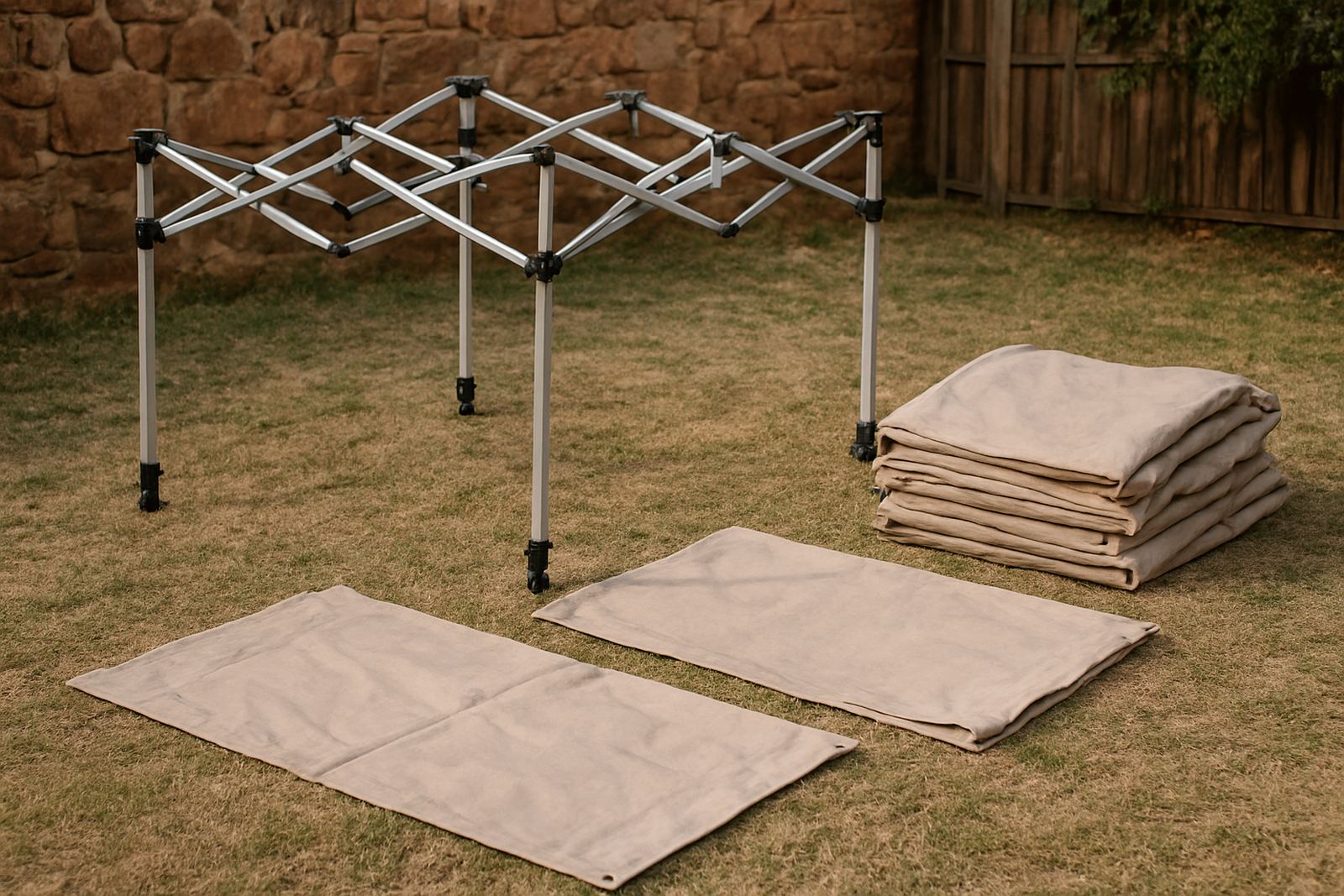
The best setup depends on how far away people need to see you. Banners work well for direct messages, prices, schedules and branding close to eye level. Flags give height and movement, which helps in open spaces and along roads where people need to spot your site from a distance. Shelters create a visible base and give your team shade, which matters in the North West heat and during long event days.
For a simple stand, one shelter with a front banner and two tall flags is often enough. For larger launches, sports days or mine open days, add side banners to frame the area and keep the message visible from more than one angle. A gazebo also helps if you need tables, stock, sample products or sign-in sheets under cover.
- Use banners for names, messages, contact details and offers.
- Use flags for height, direction and roadside visibility.
- Use a shelter when staff, stock or visitors need shade.
- Keep the colour palette consistent across all items.
- Leave enough open space for people to step in and out safely.
Design for fast reading in bright conditions
At an event, people usually read while walking, turning or standing in a queue. That means the message must be short, bold and easy to understand in a few seconds. Large format printing works best when the main words are large enough to be read from across a parking area or sports field. Avoid crowding the design with too many lines, too many logos or too much small text.
Use strong contrast between text and background. Dark text on a pale background, or pale text on a darker field, usually reads better in bright sunlight. If your event is in a dusty or windy area, choose artwork that still looks clean from a distance. For schools and community events, include the name clearly and keep the tone simple. For mines and contractors, add site-specific wording if the audience needs to know the department, team or service area.
Before printing, check spelling, phone numbers, dates and venue names carefully. A small mistake on a banner is hard to fix once it is up, so artwork setup should be checked line by line.
Plan the structure so wind, weight and ground conditions do not cause trouble
Rustenburg weather can change quickly, and a display that stands neatly in the morning can shift in the afternoon if it is not anchored properly. Flags need firm bases or secure fixing points. Shelters need proper weighting, pegging or tie-downs. Banners need the right finishing so they stay straight and do not flap loose in the wind. If the event is on grass, gravel, paving or mine ground, the fixing method may need to change.
Do not rely on one support for everything. A banner can be tied to a frame, a fence or a shelter, but it should never hang where it can twist or block walkways. If there is load-shedding during the event, plan for lighting, power banks or other backup arrangements if your stand depends on electricity. That is especially important for evening functions, product launches and indoor halls with limited backup power.
- Check the ground type before delivery.
- Use weighted bases where pegs are not allowed.
- Keep ropes and straps out of public walkways.
- Test the setup before the crowd arrives.
- Carry spare ties, clips and cleaning cloths.
Set up a simple workflow for the day of the event
A good event setup needs a clear sequence. Start with the shelter, then add the tallest items, then fix the banners and lastly place any smaller items like table signs or branded gifts. This order saves time and reduces the chance of having to move things twice. It also helps when the team is working in a tight space, such as a school hall entrance, mine briefing area or shopping centre forecourt.
Assign each person one role. One person handles the frame and positioning, one checks the print placement, one deals with stock and another keeps the area tidy. If the event runs for several hours, make a plan for water, shade and quick cleaning. Dust, fingerprints and footprints show quickly on printed items, so a small maintenance kit helps keep the display looking presentable through the day.
If you are planning a repeat event, keep a list of what worked and what needs changing. A better angle, higher flag or wider walkway can make a real difference next time.
Use one display package for schools, mines and public events
Different events need different priorities, but the same three elements often carry the setup: banners for information, flags for visibility and shelters for comfort. Schools usually need clear names, programme details and safe walkways. Mines often need site rules, department branding and a layout that can handle dust and wind. Public events and promotions usually need the strongest visual impact from the road or entrance point.
For clients across Rustenburg, Tlhabane, Phokeng, Kroondal, Boshoek, Marikana, Mooinooi and Mogwase, a practical package often includes design, large format printing, finishing, delivery and setup. Where needed, we also handle vinyl cutting, banner finishing, sign installation and gift branding so the whole display arrives ready for the day. That reduces last-minute stress and keeps the setup consistent from one event to the next.
Once the event is over, clean and pack the items properly. Rolled banners should be stored dry. Flags should be checked for wear at the seams. Shelters need a full inspection before the next use, especially after strong wind or a long day in the sun.
Quick event display checklist before doors open
Use this final check before the first guest arrives. It catches the small problems that often become big problems once the crowd builds up.
- Artwork is correct and approved.
- Banners are level and easy to read.
- Flags are visible from the main approach.
- Shelter is weighted or pegged properly.
- Walkways are open and safe.
- All fixing points are tight.
- Extra ties, tape and cleaning cloths are on hand.
- Stock, gifts and printed material are arranged neatly.
If you need a practical event display for a school function, mine activation or business promotion in Rustenburg and surrounding areas, the right mix of banners, flags and shelters will make the stand easier to use and easier to notice. A tidy setup does more than look good, it helps people understand who you are and where to go.