
Start with the job site, not the logo
Before adding any name or logo to safety wear, think about where the garment will be used. A mine in Bojanala has different needs from a school maintenance crew, and a roadside team in Rustenburg may need hi-vis details that stay visible in dust, early light and load-shedding conditions. The best branding choice is the one that supports the task, the weather and the site rules.
In the North West, heat, dust and frequent washing can shorten the life of weak prints. On coastal jobs it is humidity and salt air, while on inland sites it is sun and abrasion. That is why the garment fabric, reflective tape, logo size and artwork colour must all be checked together before production starts.
- Confirm the work area: underground, plant floor, roadwork, warehouse or public-facing service crew.
- Check the garment colour already in use for the site.
- Ask whether reflective tape must remain fully clear around the body and arms.
- Note if the wearer's name, company name or department is needed on every item.
Choose the right PPE for the branding method
Not every safety garment takes branding in the same way. Cotton shirts can handle embroidery and certain print methods well, while coated rainwear, reflective vests and heavy jackets need a more careful approach. For PPE, the question is not just what looks neat, but what will hold up after repeated washing, sun exposure and daily movement.
Embroidery gives a stitched finish that suits structured items like overalls, fleece tops and work shirts. For lightweight high-visibility wear, smaller prints or vinyl markings may be better if the garment surface allows it. We normally check fabric weight, stretch and seam position first so the branding does not sit where it will crack, pucker or interfere with comfort.
- Use embroidery for thicker garments such as overalls, jackets and caps.
- Use print only where the material can take it without closing down breathability.
- Avoid large solid blocks over reflective tape or mesh panels.
- Keep logos away from zips, pockets and high-stress seams.
Keep visibility first on hi-vis and safety colours
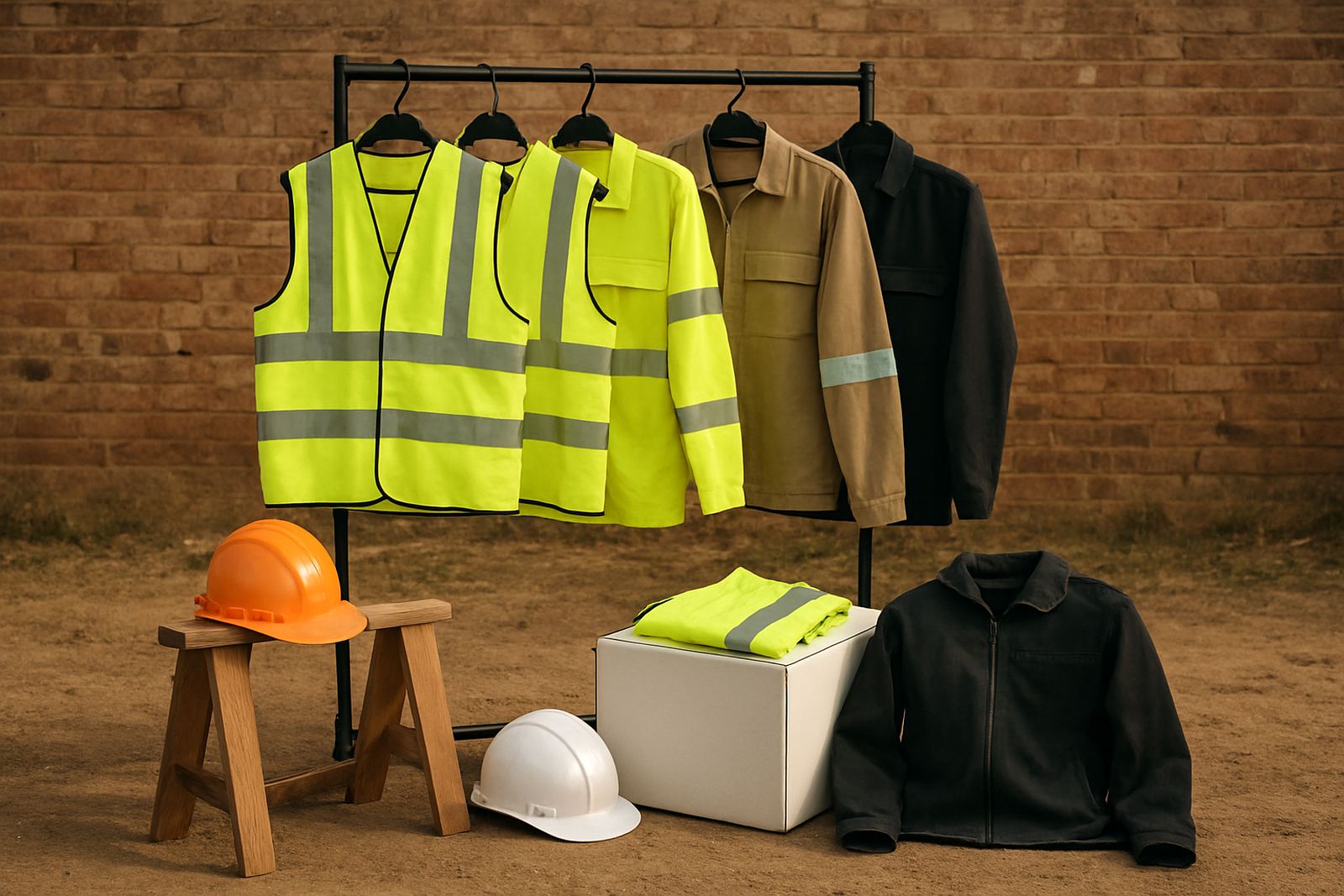
Hi-vis clothing is there to be seen. That means branding should never bury the safety colour or cover the reflector strips. A logo that is too large, too dark or placed in the wrong spot can reduce the garment's visibility from a distance, especially at dawn, dusk or in dusty conditions around Rustenburg and Marikana.
For orange, lime and yellow safety wear, lighter logo versions often work better than heavy dark artwork. If your brand colours are dark, we can sometimes reverse them out or simplify the mark so it remains readable without swallowing the garment. On reflective garments, the key is restraint. A smaller chest mark and a clean back print often do the job better than trying to fill every open area.
Useful rule of thumb: if the branding draws the eye before the person, it is probably too much for PPE.
Pick print sizes and placements that suit the wearer
Placement matters as much as the artwork itself. A chest logo is useful for visitor-facing staff and supervisors. A back print is better for crew identification at a distance. Sleeve branding can help with department names or site numbers, but it should not interfere with arm movement or get hidden by gloves and tools.
For most PPE, smaller and cleaner is safer. Large prints on the stomach or shoulder can crease when the wearer bends, lifts or drives. On jackets and overalls, the left chest, upper back and upper sleeve are usually the most practical spaces. If the item is to be worn with a harness, apron or vest, we check all layers together so nothing is hidden once the full kit is on.
- Chest: best for logo, staff name or department.
- Back: best for company name, site name or large identifier.
- Sleeve: best for small detail, but keep it clear of folds.
- Leg or lower back: only if the site rules allow it and the print will not rub off quickly.
Match the branding to wash cycles and site wear
PPE gets washed hard and often. Between dust, grease, sweat and general wear, a weak print can fade long before the garment itself is finished. That is why it helps to choose a branding method that suits the fabric and the number of washes expected each month. A warehouse shirt worn twice a week is not the same as a mine-issued garment used every shift.
If garments are used in hot sun or under layered clothing, the branding must also cope with friction. Reinforced stitching around embroidery, careful curing on print, and correct sizing all help the mark stay legible. We also advise clients to keep one sample garment for testing before rolling out to the full team, especially when ordering for several branches or contractors at once.
- Ask how often the garment will be washed.
- Check if industrial detergents or bleach are used.
- Test one garment before approving the full batch.
- Store extra items flat and out of direct sunlight until issue.
Branding checklist for procurement and issue
Good PPE branding is easier when the buying team and the site supervisor agree on the same details from the start. A short checklist avoids delays, wrong sizes and artwork changes after production has already started. It also helps when different teams need different identifiers, such as school staff, maintenance crews, security teams or mine contractors.
For Rustenburg buyers, it helps to record the basics before sending anything through the enquiry form on our contact page. That keeps the process tidy and makes it easier to plan production for branch orders across Tlhabane, Phokeng, Kroondal, Boshoek, Marikana, Mooinooi and Mogwase. If the same design must be used across several sites, note any local differences in colour, role name or reflective needs.
- Garment type and fabric.
- Required safety colour and reflector layout.
- Artwork file or wording for the print.
- Sizes and quantities by department.
- Whether names, titles or site numbers must be included.
- Deadline, delivery point and any site access rules for setup.
When to ask for help before you place the order
If your PPE includes multiple colours, reflective tape, small text or mixed materials, it is worth getting the artwork checked before production. The same applies when you are ordering for different roles and want the branding to stay consistent across overalls, rainwear, shirts and caps. Small decisions at the start can save wasted stock later.
From our Rustenburg CBD base, we support mines, schools and businesses across Bojanala. Our team, led by Jabulani Seleka with operations, production, design, sales, installation and embroidery support, handles the practical side of artwork setup, embroidery digitising, garment branding and delivery. If your team needs PPE that looks professional and still works on site, start with a clear brief and we will help shape it properly.