
What folded brochures do for your message
A brochure gives you more room than a flyer without moving into booklet territory. It is useful when you need to explain a service, list product options, give step by step information, or show event details in a tidy format that fits into a bag, glovebox or filing tray. Folded brochures are also easier to hand out at receptions, site meetings, expos, school open days and public notices because the reader can open and close them as needed.
For Rustenburg businesses, brochures work well when you need to communicate clearly on paper without relying on a screen. They suit mining suppliers, schools, clinics, lodges, training providers, contractors and local service businesses that still need printed material for walk-ins and field teams. A well planned brochure can carry your branding, contact details, maps, opening times, terms and product notes in one compact piece. It is simple, but when it is set up properly it does a lot of work.
Sizes, folds and print finishes that suit the job
We produce brochures in practical formats that work for different amounts of content. The most common options are A4 folded to A5, A3 folded to A4, and DL style brochures for mailers and handouts. Depending on your layout, you can choose a single fold, tri-fold, Z-fold or gate fold. Each fold changes how the reader moves through the information, so the order of your panels matters.
Paper choice affects both the feel and the durability. For everyday handouts, 128 gsm or 150 gsm coated stock is often enough. For a more presentable piece, 170 gsm or 250 gsm can be used, especially where the brochure must hold up in handbags, site offices or vehicle boxes. We can print in full colour on one side or both sides, and we can add gloss or matt lamination where extra handling is expected. Gloss gives stronger colour while matt is easier on the eyes under bright light.
- Standard sizes: A4, A3, A5 and DL
- Fold styles: single fold, tri-fold, Z-fold and gate fold
- Paper options: 128 gsm, 150 gsm, 170 gsm and 250 gsm
- Finish options: gloss, matt or uncoated depending on use
Where brochures are most useful in Rustenburg and Bojanala
Brochures suit places where people need to read, compare and keep information. In schools they work for enrolment packs, programme details, parent meetings and fundraising drives. In the mining sector they help with contractor introductions, training summaries, safety information and service lists. For events they are useful for schedules, speaker notes, venue maps and sponsor information. They also work well for lodges, guesthouses, motor services, health practices and municipal notices where a printed handout feels more reliable than a quick verbal explanation.
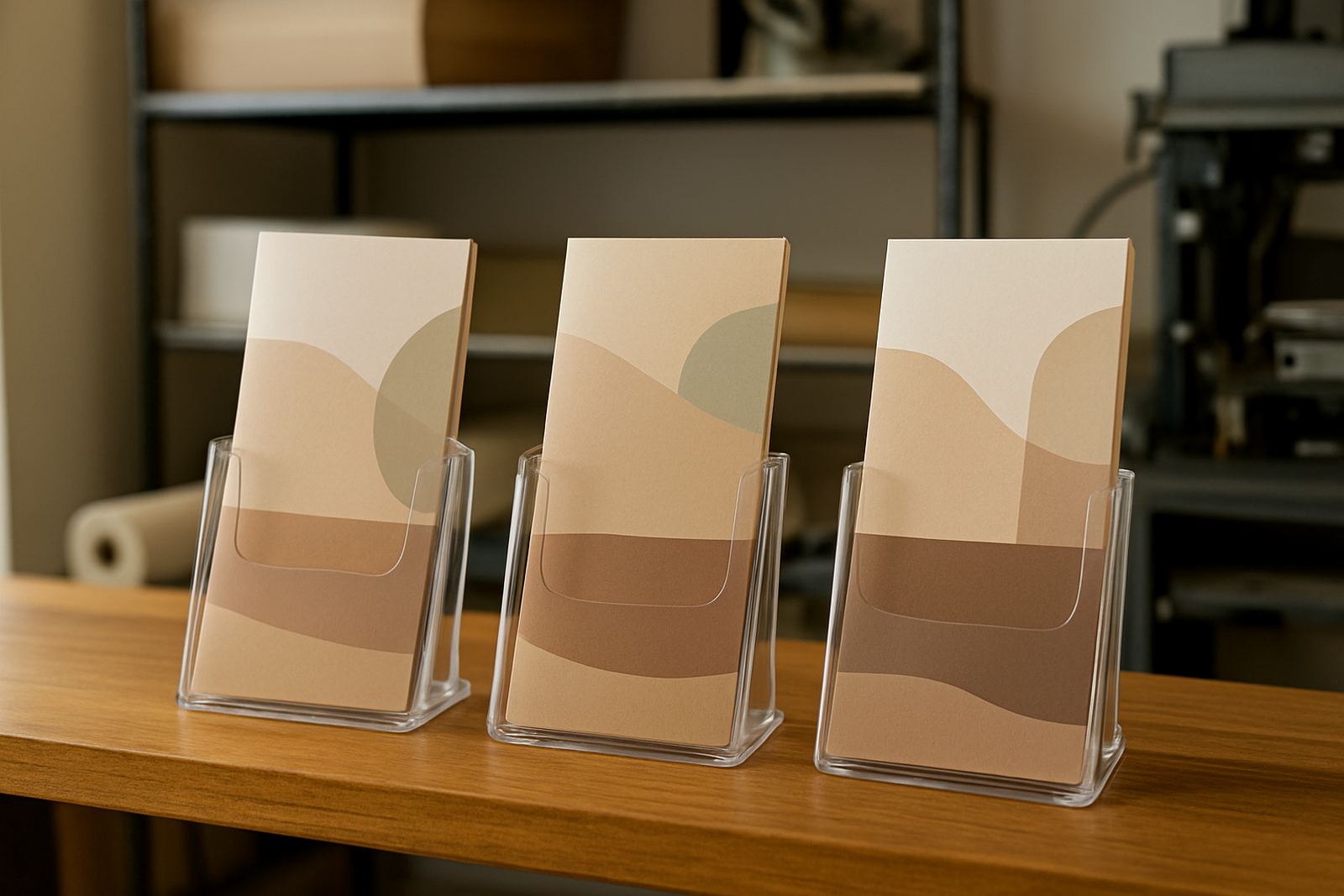
Because many sites in the area deal with dust, sunlight and load-shedding, brochure design should be practical. Dark text on a clean background is easier to read than a busy layout. If a brochure will be handled often, we recommend stronger paper or lamination on the cover panels. If it will be displayed on a table or reception counter, a neat tri-fold or gate fold can make it easier for people to take one copy without making the stack untidy. In humid or coastal-linked supply chains, even inland stock can pick up moisture during storage so packaging matters too.
- Suitable for schools, mines, clinics and local service businesses
- Useful for product catalogues, training notes and event programmes
- Can be supplied flat or folded, depending on distribution needs
- Good for handouts at receptions, site meetings and expos
Artwork setup and print checks before we run the job
The best brochure starts with clean artwork. We can help with graphic design and artwork setup if your layout needs sorting before print. That includes setting the page size, placing folds correctly, checking image quality and making sure text does not sit too close to the crease. A brochure can look neat on screen but fold badly if the panel order is wrong, so the setup stage matters more than many people expect.
When you order, check the following before approval: your page count, the fold type, the final size, the spelling of names and phone numbers, whether images are sharp enough, and whether your contact details are current. If the brochure is for a promotion or event, confirm dates and venue details carefully. If you are including product prices, make sure they are still valid for the period you want to use the brochure. Small changes can save a reprint later, and that is always better than carrying a box of outdated stock.
- Confirm fold style and panel order before print
- Use high resolution images where possible
- Check spelling, prices, dates and venue details
- Allow space around folds so text does not crack or disappear
How brochures are printed, finished and supplied
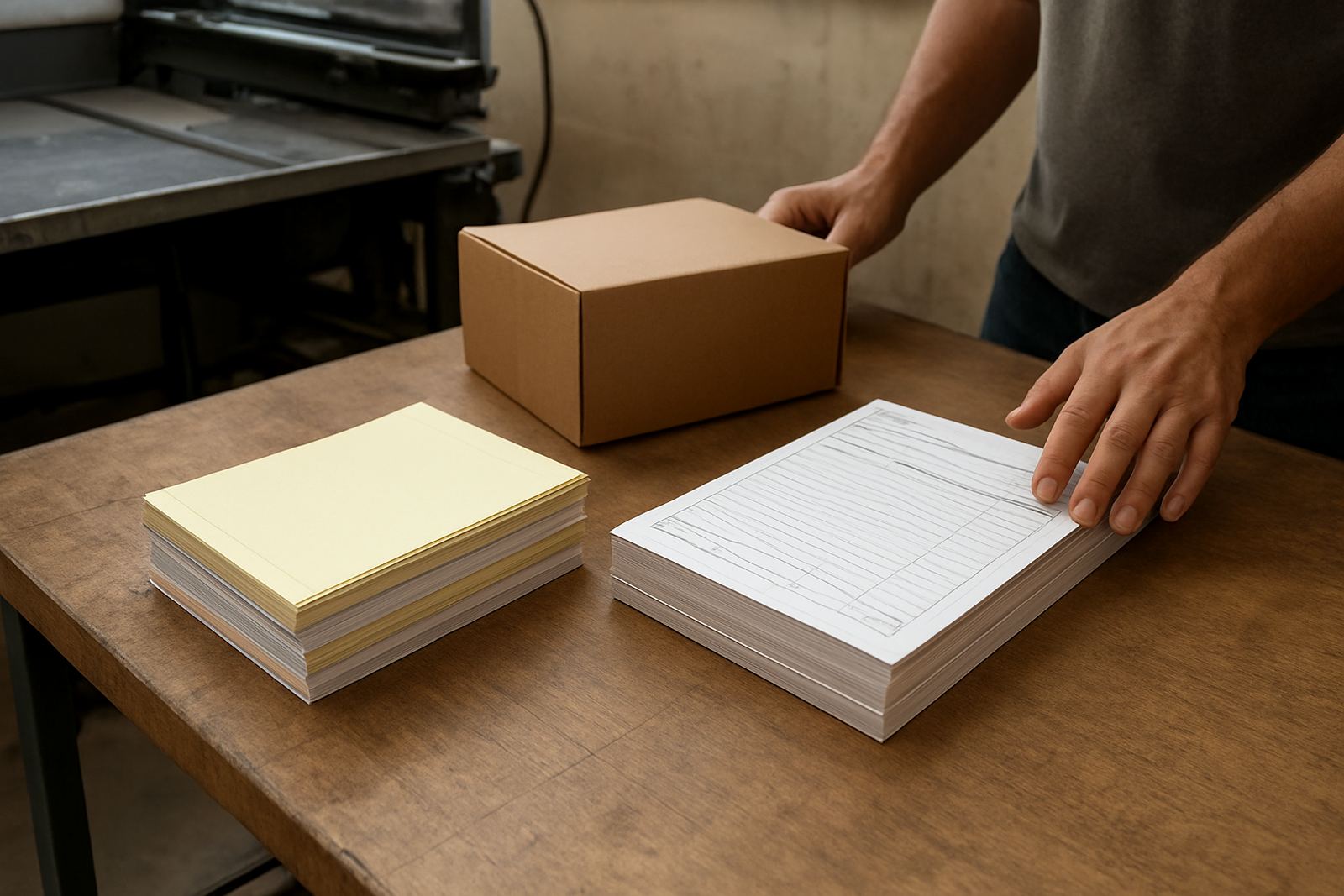
Brochures are printed in batches that suit your quantity and deadline. Once the print run is complete, we trim the sheets, crease the fold lines and finish the job ready for distribution. Where needed, we can add lamination or other finishing options depending on the paper and the way the brochure will be used. For larger campaigns, brochures can be packed by quantity to make handout easy for teams on the road or at a stand.
If the brochure is part of a bigger branding order, we can also match it with other printed items such as business stationery, stickers, banners or promotional gifts. That helps keep the same look across your material. For businesses that operate in shifts or during load-shedding, printed brochures are useful because they stay available when screens and chargers are not. Once printed they do not need power, gas or any active installation, only proper storage and careful handling. If they are kept in a dry cupboard or sealed box, they last better and stay cleaner.
Care, storage and reordering when stock runs low
Brochures do not need servicing in the usual sense, but they do need sensible storage. Keep them flat, away from direct sunlight and away from damp floors or open workshop areas. If they are going into vehicles, it helps to keep them in a closed container so they do not curl or pick up grime. Avoid stacking heavy items on top of them, especially on finer paper weights, because the crease and corners can mark quickly.
If you use brochures regularly, it is worth ordering a little extra rather than printing tiny batches every week. That saves time and helps keep your message consistent. Reordering is easier when your layout is already approved and your artwork is stored safely. For businesses in Rustenburg CBD, Tlhabane, Phokeng, Kroondal, Boshoek, Marikana, Mooinooi and Mogwase, we can keep repeat work straightforward so the same brochure can be printed again when your stock gets low.
- Store flat in a dry, dust-free place
- Keep away from direct sun and moisture
- Use packaging or cartons for vehicle distribution
- Reorder before stock runs too low so you do not rush the artwork
Key facts
| Product type | Folded brochures for services, programmes, products and events |
|---|---|
| Common sizes | A4 folded to A5, A3 folded to A4, A5 and DL |
| Fold options | Single fold, tri-fold, Z-fold and gate fold |
| Paper options | 128 gsm, 150 gsm, 170 gsm and 250 gsm coated or uncoated stock |
| Print options | Full colour one side or both sides |
| Finishing | Trimmed, creased and optional gloss or matt lamination |