
Clean stitch files for repeat embroidery
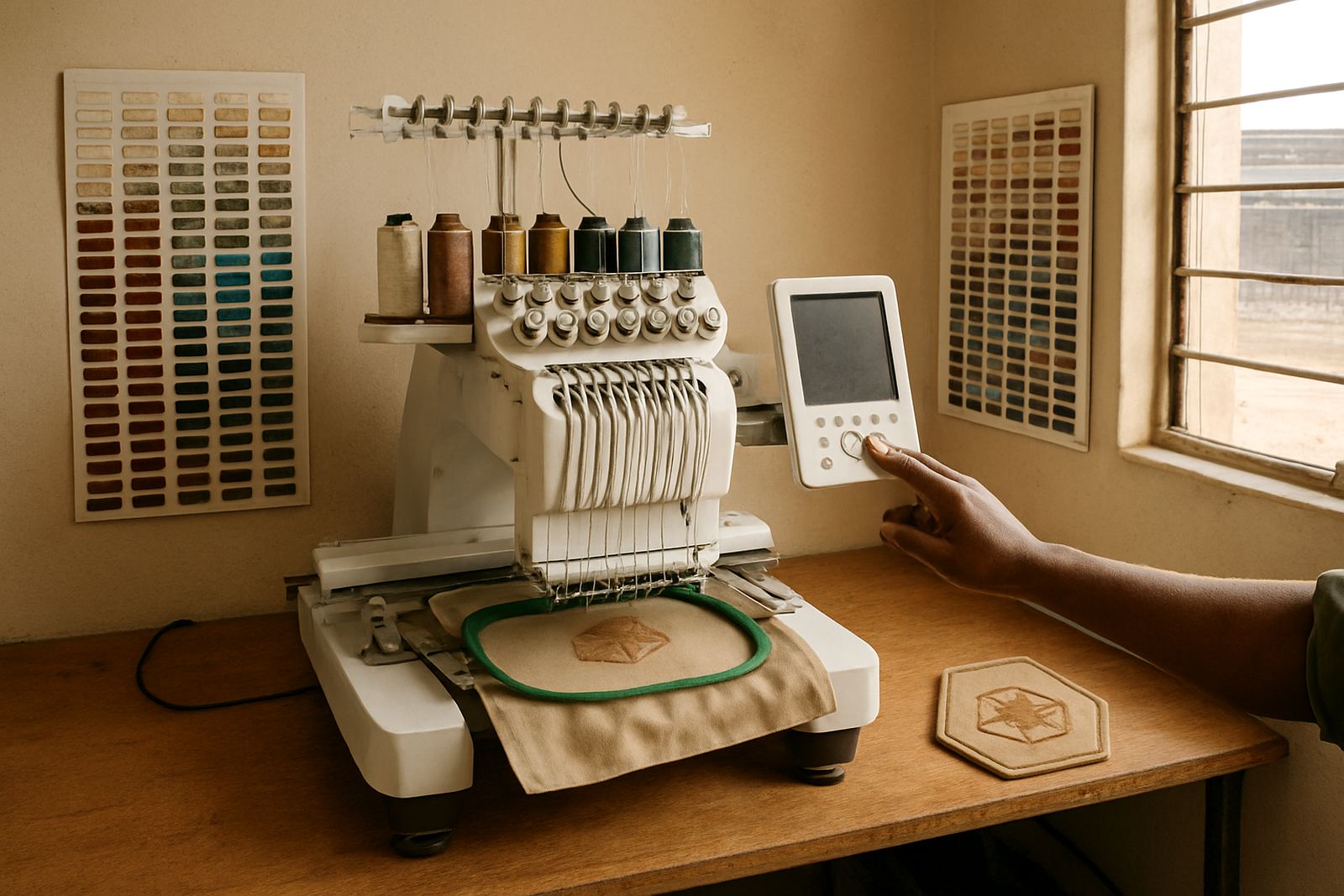
Embroidery digitising is the process of converting your logo or artwork into a machine-ready stitch file. A good file tells the embroidery machine where to sew, how dense to stitch, which direction the thread should run, and where to trim between sections. That is what gives you a neat finish on shirts, golf shirts, jackets, caps and safety wear.
Our Rustenburg team prepares digitising for day to day use on uniforms that are washed often, worn hard and sometimes exposed to dust, sun and heat on site. We keep the stitch layout practical, with enough detail for the logo to stay readable without overloading the fabric. The result is cleaner embroidery, fewer thread breaks, and less puckering on lighter garments.
- Suitable for left chest logos, cap fronts, sleeve marks and back branding
- Works for flat embroidery and structured caps
- Set up for repeat production across different garment sizes
- Prepared for workwear, school wear, hospitality clothing and promotional items
What we include in an embroidery digitising job
Every digitising job starts with your logo, artwork or a clear photo of an existing sample. We inspect the detail, check the line thickness, and decide whether the design needs a simple clean-up before stitching begins. If a logo has tiny text, gradients, or thin outlines we advise what will work best on fabric so you do not waste money on a file that looks fine on screen but fails on cloth.
We prepare the file with stitch direction, underlay, pull compensation, entry and exit points, colour sequence and trim logic. That matters because embroidery is not print. It must be engineered for needle, thread and fabric movement. We also balance the size to suit the item, because a logo that works on a jacket may be too small for a cap front, or too dense for a lightweight golf shirt.
- Logo clean-up and stitch planning
- Thread path and colour sequence setup
- Underlay for structure and better hold
- Pull compensation to help with fabric movement
- Size guidance for caps, shirts, jackets and bags
How the digitising process works
Our process is straightforward. First we assess the artwork and confirm the intended garment or item. Next we map out the stitch order and choose the best approach for letters, borders, fills and fine detail. After that we create a test file and, where needed, run a sample stitch out to check for density, alignment and finish.
Once the file has been checked, we save it in the correct format for production and keep it on record for repeat orders. That is important for companies that order uniforms in batches through the year. If your site team at Marikana needs more shirts in three months, or a school in Phokeng wants extra caps next term, the same file can be used again without starting from scratch.
- Artwork review and practical advice
- Stitch mapping and file creation
- Test run where needed
- Final save for repeat production
- Support for future reorders and size changes
Turnaround times for Rustenburg and surrounding areas
Turnaround depends on design detail, file readiness and how many variations you need. A simple logo on a clear vector artwork can often be prepared quickly, while a complex crest or multi text layout takes longer because it needs tighter stitch planning. We also factor in whether the job is for one item or for a full uniform run.
For local work in Rustenburg CBD and nearby areas like Tlhabane, Kroondal, Boshoek, Mogwase and Mooinooi, collection and delivery can be arranged together with production timing. If your job is linked to a launch, a tender deadline, or a mine induction date, tell us early so we can plan around it. Load-shedding and site access rules can affect the production window, so we build that into scheduling instead of promising unrealistic lead times.
- Simple files can move faster than complex crests
- Repeat orders are quicker because the file is already set
- Urgent requests depend on artwork quality and queue space
- Delivery and setup can be arranged for local customers
Pricing and file setup for embroidery work
Pricing is based on the complexity of the artwork, the number of stitch colours, size, level of detail and whether the logo needs redraw work before digitising. Straightforward business marks are usually simpler to set up than badges, school crests or logos with small wording. We quote practically, so you know what is driving the cost before work starts.
If you are ordering uniforms or caps in bulk, it is often cheaper over time to have the correct file set up once and reused for later runs. That saves on setup changes and helps keep embroidery consistent across branches, teams and shifts. For clients who operate in the mines, schools and service sector, consistency matters more than chasing the lowest one-off price.
- Cost depends on stitch count and detail
- Redraw work can be added if artwork is not print-ready
- One-time setup can reduce future order costs
- Bulk uniform orders benefit from repeatable files
Keeping embroidery files in good shape over time
Embroidery files are not something you want to recreate every season. When a uniform range changes, a logo gains an extra line of text, or a cap size shifts, the file should be reviewed and adjusted. We recommend checking the stitch file before any major reorder, especially if the item fabric has changed from thick cotton to a lighter polycotton or technical garment.
Maintenance intervals depend on use. For high wear clothing in a dusty or hot environment, it is wise to review embroidery setup every time there is a new batch, and at least once a year for long running corporate orders. Thread choice, fabric weight and garment stretch all affect how the stitch sits, so regular review helps keep the finish neat and prevent problems before they show up on the production line.
- Review files when logos or garments change
- Check stitch settings before repeat orders
- Reassess after fabric or supplier changes
- Annual file checks help long term consistency
Key facts
| Service area | Rustenburg CBD, Tlhabane, Phokeng, Kroondal, Boshoek, Marikana, Mooinooi, Mogwase |
|---|---|
| Typical formats | DST, PES and other machine-ready embroidery file types |
| Common items | Caps, golf shirts, work shirts, jackets, aprons and bags |
| Detail range | Best for logos with clean lines, clear text and solid shapes |
| Turnaround | Depends on artwork quality, stitch count and queue position |
| Pricing basis | Size, stitch density, colour count, redraw work and repeat use |