
Banner finishing that suits the way you hang it
Banner finishing is what makes a printed banner usable in the real world. A good print can still fail if the edges fray, the fixing points tear or the size does not match the frame, wall or fence. Our Rustenburg team finishes banners for roadside promotions, mine notices, school functions, dealership forecourts and event backdrops, with each job matched to the fitment method you plan to use.
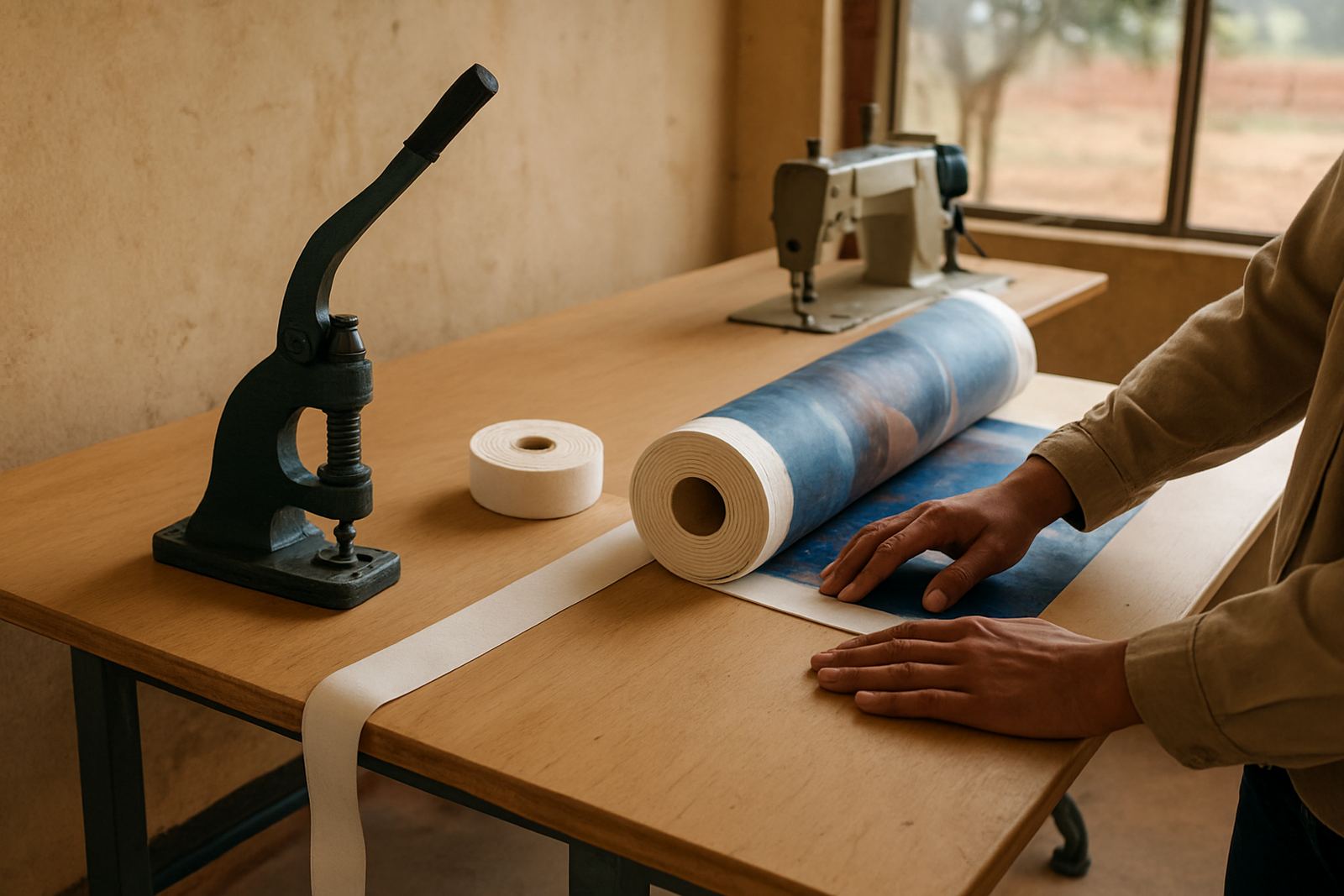
We work with PVC and fabric banners, short-term event pieces and longer life outdoor signage. Depending on the application, we add welded hems, stitched hems, eyelets, pole pockets, sleeves, corner reinforcement and extra webbing. If your banner will face wind on an open site or repeated handling at a busy venue, we recommend stronger edge finishing from the start rather than trying to patch it later.
What is included in the finishing process
Every banner is checked before finishing so the final piece suits the print, the size and the mounting point. We confirm the dimensions, where the tension will sit and whether the banner needs loading for outdoor use, indoor display or repeated assembly. If artwork is still being adjusted, our graphic design team can help with bleed allowances and safe margins before the banner goes to finishing.
- Edge trimming to final size and square corners
- Hemming or welding on exposed edges
- Metal eyelets spaced for even tension
- Reinforced corners for high-stress points
- Pole pockets or sleeves for rods, frames and banner stands
- Optional extra support for large format banners over 2 metres wide
For banners used near coastal humidity or in dusty industrial areas, we can recommend finishing that reduces curling and edge wear. If the banner will be moved between sites, we also suggest the right fold lines or roll storage method so it stays neater in transport.
How we finish banners for local conditions
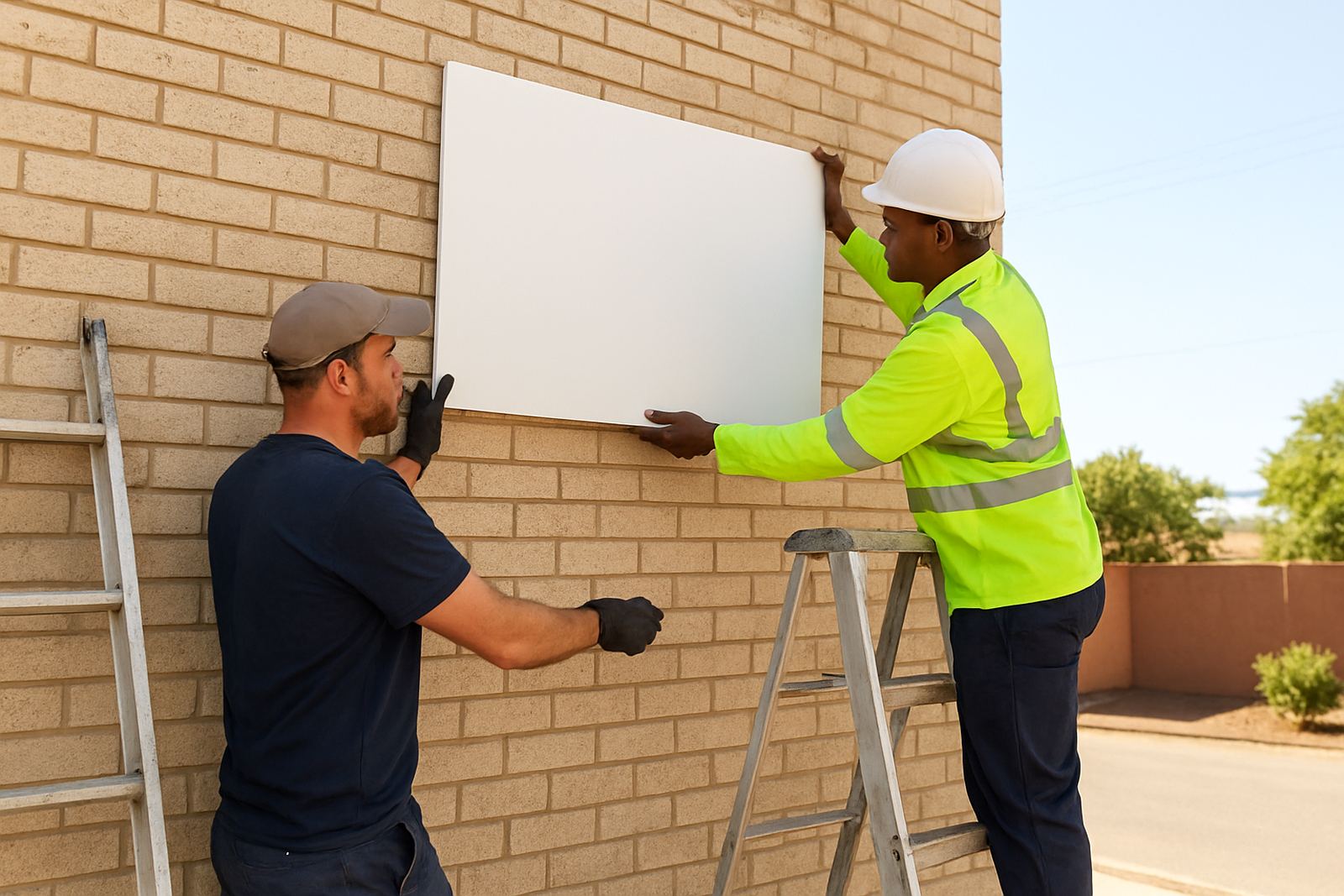
In Rustenburg and across the mining belt, banners have to cope with gusts, sun, dust and rough handling. That means the finishing needs to be practical, not just neat. A banner on a perimeter fence needs different support to one hanging inside a hall, and a banner on a frame needs a different pocket size to one tied directly to steelwork. We plan the finish around those conditions, then make the banner ready for installation or collection.
Our production supervisor checks the edge strength and eyelet spacing before release. For larger banners, we usually suggest closer eyelet spacing on the windward sides, plus extra reinforcement at the corners. If the banner is likely to be taken down and put up again, we can increase the strength at the fixing points so the material lasts longer over multiple uses. That small change can save money over a season, especialy on school sport and event work.
Turnaround, sizing and file checks
Turnaround depends on quantity, size and the amount of finishing required. A single standard banner with simple eyelets may be completed quickly, while large orders, custom sleeves or reinforced edges need more production time. We always confirm the job before we start so you know what is being finished and when it will be ready. If the banner is part of a wider rollout across Rustenburg, Tlhabane, Phokeng, Kroondal or Marikana, we can stage the work so sites are supplied in order.
- Small finishing jobs: usually same day or next working day, depending on queue
- Standard banners: allow 1 to 3 working days
- Large batches or custom reinforcement: allow 3 to 5 working days
- Delivery and setup can be arranged for local sites
Before finishing, we check final size, bleed and safe text zones. If a banner has a logo too close to the edge or a hole where an eyelet will sit, we will flag it before production carries on. That avoids waste and keeps the final banner aligned with the installation plan.
Pricing approach for banner finishing
Our pricing is based on banner size, the number of eyelets, the type of edge finishing and whether extra reinforcement or sleeves are required. We do not price by guesswork. A simple 2 metre by 1 metre banner with standard eyelets will cost less than a heavy-duty fence banner with welded hems, corner patches and pole pockets. If you are comparing options, we can quote the finish as a separate line or include it with the print and supply order.
For repeat orders from mines, schools and businesses across Bojanala, we can keep the same finishing specification on file so reprints match the original setup. That helps when you need the same banner size for multiple branches or annual events. If your team has a set budget, tell us what the banner must do and we will recommend a finish that stays within that range while still holding up properly.
Care, storage and replacement intervals
A banner lasts longer if it is cleaned, stored and hung correctly. Dust and grit can wear at the hem and eyelets, especially on sites close to roads or open yards. Wipe banners with a soft cloth and clean water, then dry them fully before rolling or storing. Avoid folding tight creases into the same place each time, because that can weaken the printed surface and the edge finish over time.
As a guide, temporary event banners may need replacement after one season of regular use, while properly finished outdoor banners can last much longer if they are taken down during strong wind and stored correctly. Check the eyelets, corners and hems before each reuse. If you see tearing, loose stitching or distortion around the fixing points, bring it in for assessment before the damage spreads. A small repair now is easier than replacing a whole banner later.
Key facts
| Banner materials | PVC, mesh, fabric and coated display materials |
|---|---|
| Edge finishing | Hemmed, welded or stitched depending on application |
| Fixings | Brass or metal eyelets, pole pockets and sleeves |
| Maximum practical size | From small indoor banners to large format outdoor runs over 2 metres wide |
| Reinforcement options | Corner patches, webbing and extra support at stress points |
| Turnaround | Same day to 5 working days depending on size and queue |