
Put safety before size when a banner faces traffic
A roadside banner looks simple from the pavement, but once it sits near moving vehicles the risks change quickly. Wind off open streets, truck wash from passing traffic and sudden rain can all put strain on the banner and its fixings. In Rustenburg, where many entrances sit close to busy roads and mine access routes, the first step is to treat every banner as a roadside safety item, not just a marketing item.
That means checking the exact position before anything is printed. If a banner sits too close to a driveway it can block sight lines. If it hangs over a sidewalk, it can become a hazard for pedestrians. If it faces a road bend, it can distract drivers at the wrong moment. Good placement starts with a simple question: will this help people find the site without creating a new risk?
For business entrances in the CBD, around Tlhabane or near industrial sites, keep banners high enough to clear vehicles, but low enough to remain visible at a glance. The sweet spot is usually the place where the message is seen once, clearly, and then left alone. Not every wall or fence is a banner point, and that is worth remembering.
Choose the right banner type for wind, dust and rain
Not every banner material behaves the same near roads. A light banner may work well for a short event, but if it is exposed to strong wind, dust and sunlight all week, it can start to flap, crease or tear at the edges. Around Rustenburg and the wider Bojanala area, roadside banners often have to cope with dry weather, sudden storms and dust from passing traffic, so the material and finish should match the conditions.
For longer use, ask for stronger hems, reinforced corners and eyelets spaced correctly for the size of the banner. A banner that is too loose will move too much and wear out faster. A banner that is too tight can split under wind pressure. The right balance matters, and the same applies to printed graphics. If text is too small, drivers will not read it in time. If the layout is too busy, the message gets lost.
- Use thicker material for exposed roadside positions.
- Choose clear, large lettering for fast-moving traffic.
- Keep logos and contact details simple and easy to scan.
- Avoid glossy finishes where strong sun may cause glare.
For schools, shops and contractor yards, the banner should be readable in a second or two. That usually means fewer words, stronger contrast and no clutter. When a banner is meant to guide traffic into a gate, plain directions often work better than a long sentence.
Fixings and frames must match the site, not the guesswork
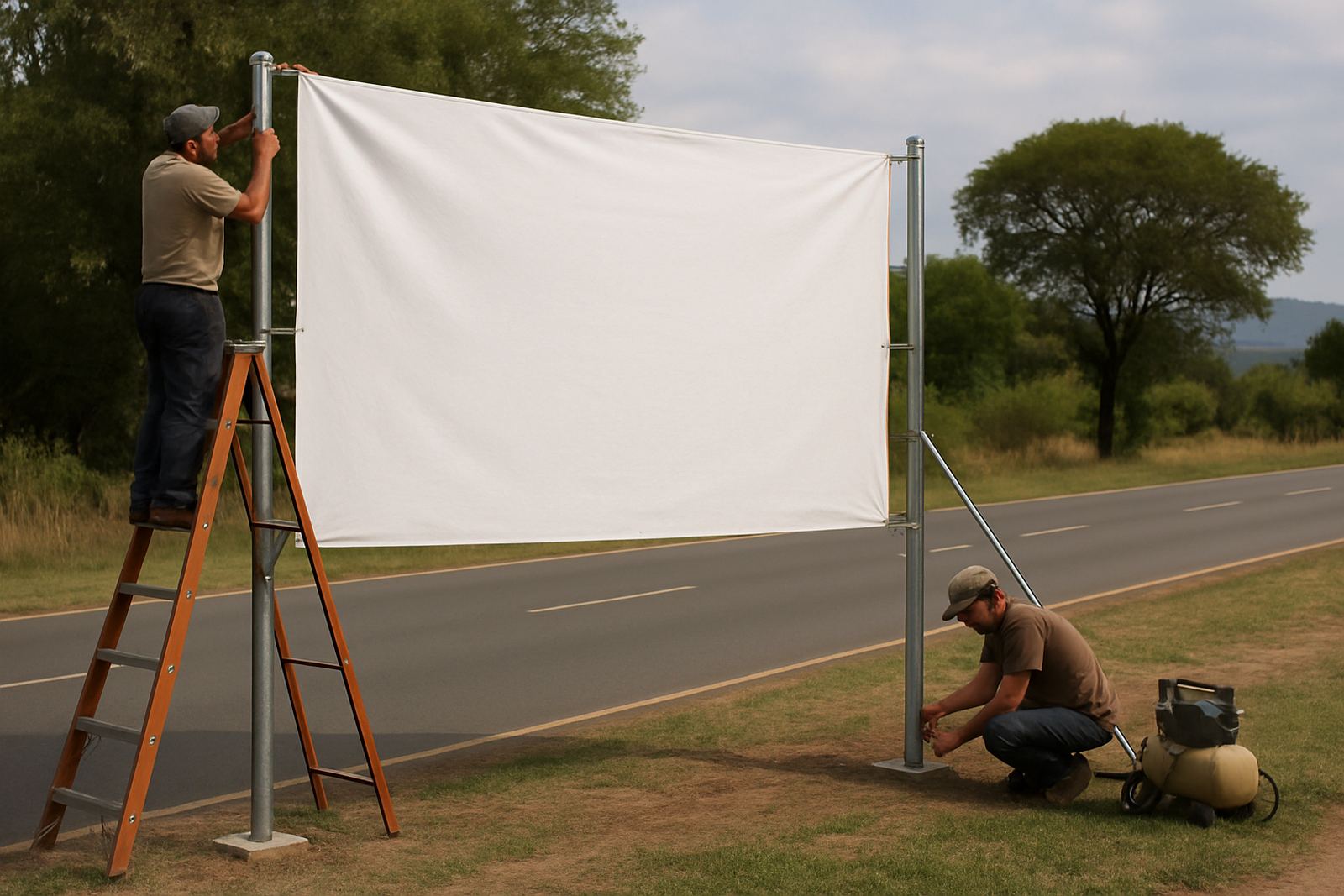
The most common roadside problem is not the print, it is the fixing. A banner that is secured with weak ties or poor anchor points can whip in the wind, tear loose or curl into the road reserve. That creates risk for vehicles, cyclists and pedestrians, and it can also damage the business image if the display looks untidy after a week.
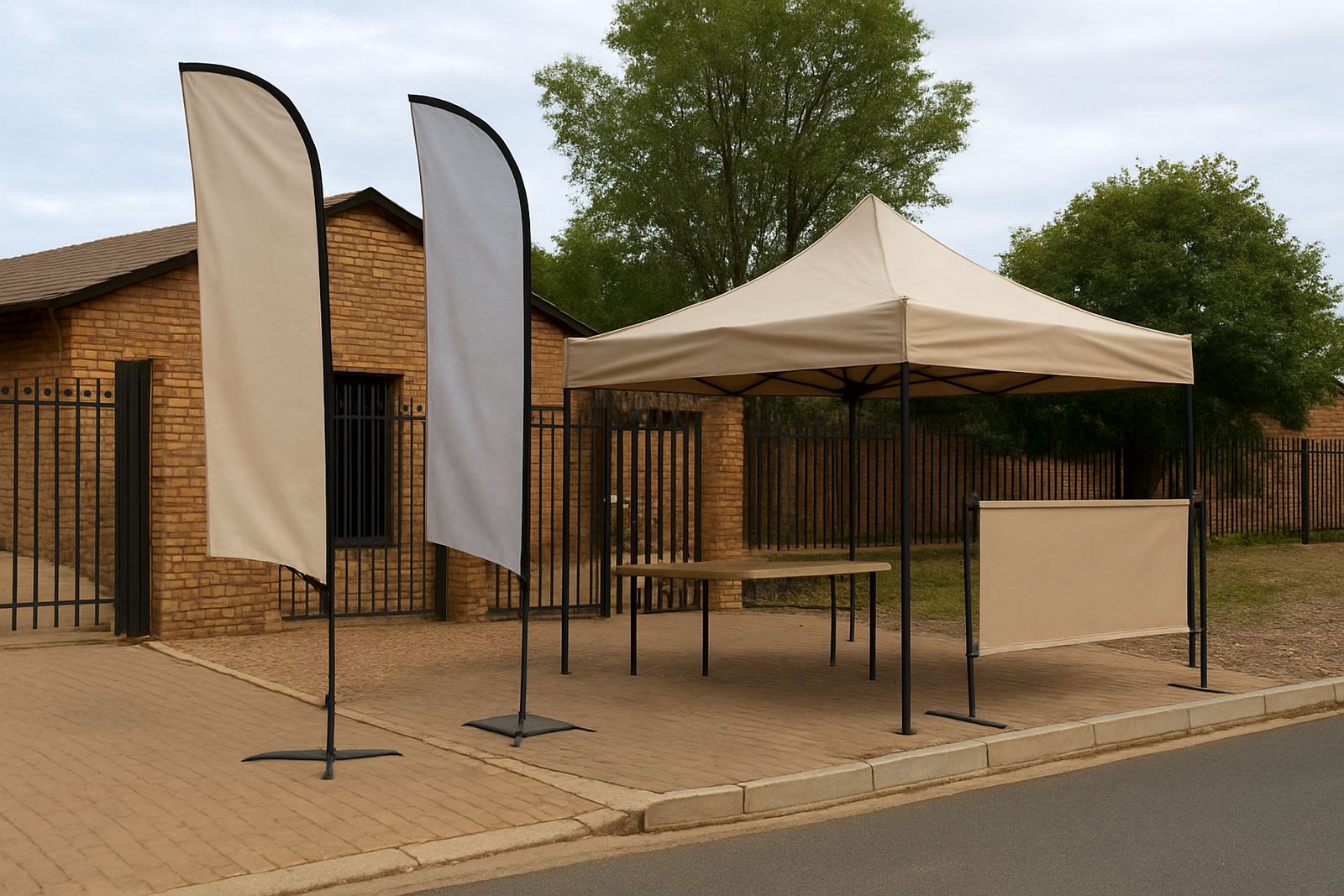
Use mounting points that suit the surface. Brick walls need different support from steel frames, fencing or poles. If the banner is fixed to a temporary structure, the base must be weighted properly. In areas where wind tunnels form between buildings or where open land meets a road, extra support is often needed. This is especially important near entrances where delivery trucks turn sharply or where a gate opens inward.
Check how the banner sits against street lights, power lines and municipal fixtures before installation. A good site check prevents problems later. The goal is simple: the banner should stay put, stay flat and stay out of the way. If your crew has to wrestle with it every time there is bad weather, the setup needs to be improved.
- Inspect eyelets, ropes, cable ties and brackets before installation.
- Make sure the banner cannot swing into a driveway or lane.
- Leave enough clearance for gates, trucks and service vehicles.
- Recheck fixings after strong wind or heavy rain.
Keep sight lines open at driveways and corners
A roadside banner should never block a driver’s view when entering or leaving a property. At a driveway, the main safety rule is sight line protection. If a banner stands too close to the edge of the gate, it can hide pedestrians, oncoming cars or bicycles. The same risk applies at corners where vehicles need to stop, turn or reverse.
In Rustenburg’s busier areas, especially along routes used by suppliers, schools and mine traffic, entrances can be tight. A banner placed on the wrong side of a gate post can make a safe entrance harder to use. That becomes a bigger issue when there is load-shedding and the area is darker than usual, because drivers rely more on visual cues from a distance. If lighting is poor, the banner position needs even more care.
A practical rule is to stand where a driver would stop and look both ways. If the banner blocks the view of the road, move it. If it hides a kerb, a curb opening or a pedestrian walkway, move it. For temporary promotions, it may be better to place the banner slightly further back and use a clear arrow or entrance sign to direct people in.
Work with local weather and municipal expectations
Local conditions matter. Rustenburg can be dry and windy for long periods, then get hard rain in one afternoon. That means roadside banners should be planned for movement, moisture and dust. If a banner is installed near a public pavement or road reserve, it should also respect local rules about encroachment and visibility. The safest setup is usually the one that stays within the property boundary and does not interfere with pedestrians or traffic.
For long-running branding outside a business yard, think about maintenance as part of the job. A banner may look fine on day one but start to sag after a month, especially if it faces sun and wind every day. It is worth setting a check date so the banner can be tightened, cleaned or replaced before it becomes unsafe. That small habit saves time and stops complaints from neighbours or passers-by.
When a banner is used near an active site, such as a supplier yard or a school entrance, make sure the message does not tempt people to stop in the road. Clear instructions like where to park, where to enter and where to wait are safer than vague directions. Good roadside communication should help traffic move, not slow it down.
- Plan for wind, dust and rain from the start.
- Keep banners inside the boundary where possible.
- Check for sagging, fading or torn edges regularly.
- Use directional wording that reduces sudden stops and confusion.
A Rustenburg example: one entrance, many users
Think of a busy entrance in the Rustenburg CBD that serves delivery vehicles in the morning, staff parking through the day and visitors after hours. A banner placed on the fence may look useful, but if it sits too close to the gate it can block the view of a reversing bakkie or a pedestrian crossing to the pavement. The safer option is often a slightly higher banner with a shorter message and a second sign closer to the gate for directions.
That approach works well for mines, schools and businesses across Bojanala. One sign can promote the brand from the road, while another helps people at the entrance find the correct point of entry. It is a simple way to reduce confusion and avoid risky last-second braking. The best roadside banner is the one people notice without needing to think too hard.
If your site has changing traffic patterns, ask for a layout that can be updated without rebuilding the whole setup. That allows you to keep the area safe while still using the space for promotions, event notices or entrance guidance. A good sign plan should adapt as the site changes, not force the site to work around the sign.
What to check before a roadside banner goes up
Before any roadside banner is installed, walk the site from the point of view of a driver, a pedestrian and a delivery vehicle. That quick check often shows what the artwork alone cannot. Is the banner readable from the road? Does it hide anything important? Can a person still step out of a gate safely? Is the fixing strong enough for the weather on that stretch of road?
Good roadside safety is practical. It is about position, visibility, fixings and regular checks. It is also about accepting that not every wall or fence should carry a banner. Sometimes moving the banner 1 or 2 metres makes all the difference. That small adjustment can keep the site neat, readable and safe at the same time.
For businesses that need banners near roads, driveways or shared entrances, the safest result comes from clear planning before installation and a proper review after the first few days of use. Once that is done, the banner can do its job without becoming a problem. A tidy banner is good, a safe one is better.