
Start with the people who will actually carry the pen
The best promotional pen is not the cheapest one on the quote, it is the one that stays in a shirt pocket, glove box or handbag and gets used. In Rustenburg and across Bojanala, that means thinking about miners, school staff, front office teams, technicians and customers who work on site. A pen that skips, leaks or feels flimsy will be put aside quickly.
Before you choose, ask where the pens will go and what they need to survive. A reception team may want a clean, neat pen for visitors, while a site team needs something tougher that can handle dust, heat and being knocked about in a vehicle. If you are handing them out at a school event in Tlhabane or a supplier day in Marikana, the pen should be easy to write with from the first use.
It helps to think in practical terms: who will keep it for a week, who will take it home and who will use it daily. That simple question often makes the decision clearer than any glossy catalogue.
Ink quality matters more than a busy logo
A printed logo can only do its job if the pen writes properly. A smooth medium tip is usually the safest choice because it gives a clear line without feeling scratchy. Cheap ink that blobs or dries out quickly makes people stop using the pen, and then your branding disappears with it.
Blue ink is still the most practical choice for business use because it suits forms, notes and signing. Black can work well for a more formal look. Red is best kept for special campaigns or admin teams that already use colour coding. If the pen is meant for schools or a clinic, readable writing is more useful than a fancy finish.
For a Rustenburg business supplying mines or contractors, the real test is whether the pen keeps writing after a day in a warm bakkie or a bag with other stationery. That is where a proper refill and sealed tip make a big difference.
The body, grip and clip should do honest work
People notice how a pen feels before they notice the logo. A slightly heavier pen can feel more valuable, but if it is too heavy, it becomes uncomfortable. A light pen can be affordable, but if it bends or feels hollow, it may not be kept. The sweet spot is a pen that feels firm without being bulky.
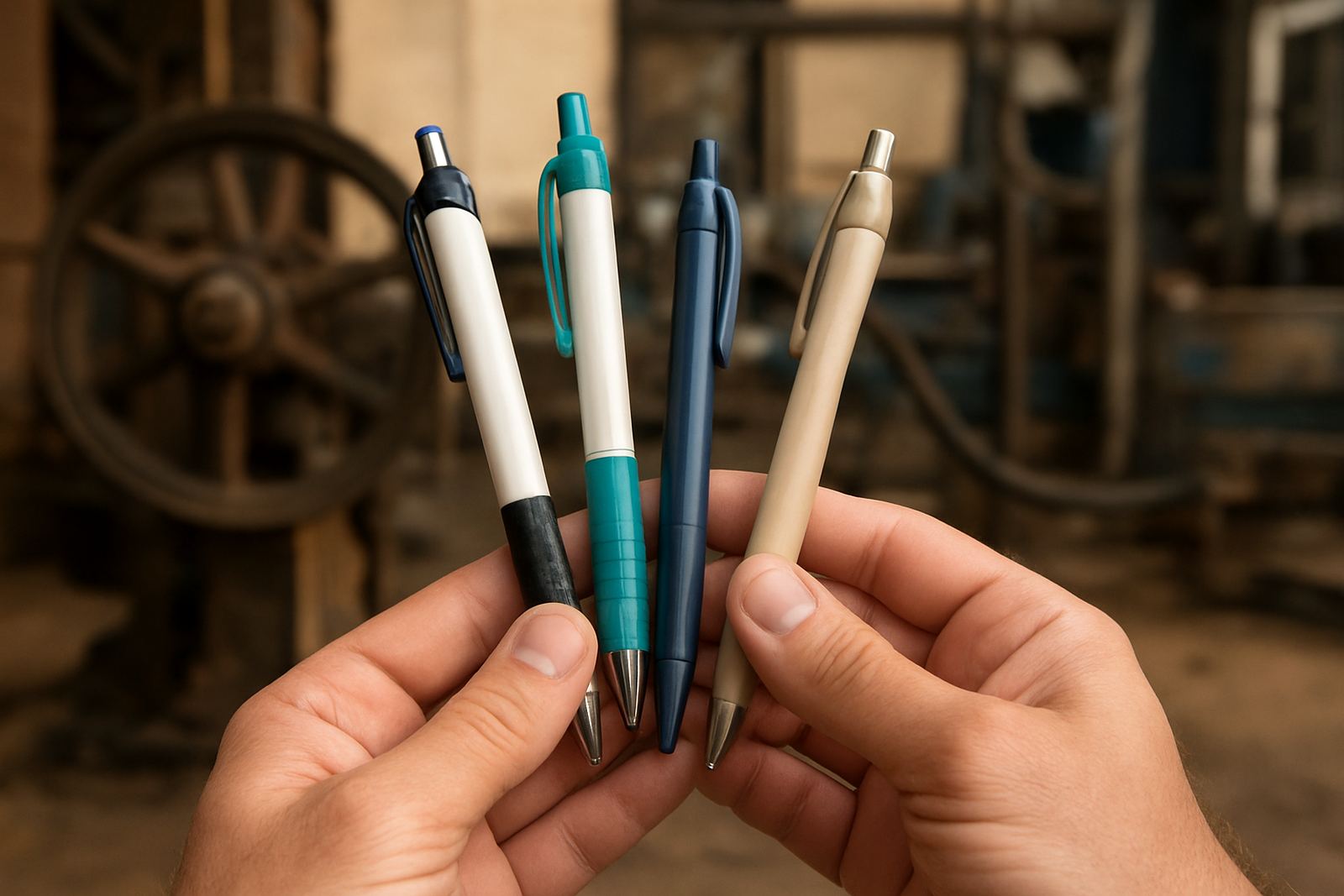
The grip matters too. Rubber grip sections are useful where people write for long periods, especially for administration teams and school offices. A clip is also worth having because it keeps the pen attached to a notebook, pocket or clipboard. Without a proper clip, pens disappear into bags and drawers.
In a humid coastal area, ink and plastic can behave differently, but in Rustenburg the bigger issue is dust and heat. A pen that closes cleanly and stays intact during daily use is usually a better buy than one with a clever shape and poor parts. It may sound simple, but the small details are what make the item worth keeping.
Branding should stay clear, even when the pen is used often
Promotional pens carry a small amount of space, so the branding needs to be clear and direct. Long slogans get lost quickly. A simple logo, company name and maybe a short line is usually enough. If the artwork is cluttered, the print can look crowded and hard to read after a few weeks in use.
Colour choice matters as well. White ink on a dark barrel can look neat, but it must be applied properly so it does not fade too fast. Dark print on a light barrel is often easier to see and gives a cleaner everyday result. If the pen will be given to schools or to the public at an expo, clarity matters more than decoration.
Choose a pen colour that fits the brand or the campaign. A company that wants a serious business look may choose navy, black or silver. A school fun run or community day may call for brighter colours. The point is not to make the pen loud, but to make it recognisable and useful.
Order size, budget and distribution should work together
Promotional pens are often bought in bulk, but bulk only makes sense if the handout plan is clear. A small batch may suit a branch opening in Phokeng or a staff training session in Kroondal. A larger run may be better for a mining contractor, a school registration day or a roadshow across Bojanala. The wrong quantity leads to waste or a shortage right when you need stock.
Set your budget against the actual purpose of the pen. If it is for direct client contact, pay for a better pen that reflects your business well. If it is for mass distribution, a reliable mid-range option is usually the better choice. You do not need to overspend, but it is worth avoiding the cheapest item if it will end up in the bin.
Also think about packaging and delivery. Pens should arrive counted, sorted and ready for issue, especially if they are going to different branches or teams. When a business is running events across Rustenburg CBD, Tlhabane and Mogwase, a simple plan for distribution saves a lot of time.
A Rustenburg example: practical beats flashy every time
Take a local supplier supporting a school sports day near Rustenburg CBD. The team wants pens for registration tables, sponsor packs and teacher giveaways. A flashy pen with a weak refill will fail after a few forms are signed. A clean, medium-weight pen with a firm clip and good blue ink will stay in circulation for weeks, maybe months.
The same thinking applies to businesses serving mines and contractors in Marikana, Boshoek or Mooinooi. People on site need something that writes first time, every time, without leaking in a pocket. If the pen is comfortable and the branding remains visible, it becomes a small but steady reminder of the company behind it.
That is the real value of a promotional pen. It is not just a giveaway. It is a working tool that keeps your name in front of the user long after the handout is over.
What to check before ordering branded pens
Before approving a pen order, check a few basics. Look at the writing feel, the cap or click action, the grip, the print area and the final artwork. If any one of those parts feels off, the pen may not last in use. A simple product that works well is better than a complicated one that nobody wants to keep.
It is also worth matching the pen to the rest of your stationery. If your business hands out notebooks, flyers or folders, the pen should fit the same tone and colour range. That way the whole package feels organised and professional, not mixed and uncertain. A proper supplier can help you compare options and avoid buying something that looks good in a photo but fails in hand.
For Rustenburg businesses, that practical approach saves time and money. You get pens that get used, your branding stays visible and the people who receive them actually appreciate the item. That is a far better result than handing out a box of pens that disappear by next week.