
Start with the main job of the brochure
The first decision is not the font or the paper stock, it is the job the brochure must do. Is it meant to introduce your company, explain a service range, support a sales meeting, or hand out at an expo in Rustenburg CBD or at a school sports day in Phokeng? Once that is clear, the content order becomes much easier to plan.
A brochure should not try to say everything at once. It should give the reader a short path from problem to solution. For a printing house like Crystal Clear Printing, that might mean opening with who you are, then showing the main services, then proving you can deliver on time in the North West. If the reader has to hunt for the basics, they usually stop reading.
- Open with a short company introduction
- Move into the main services or product groups
- Show where you work and who you serve
- Finish with a clear next step for enquiries
Put the strongest offer before the finer details
Many brochures start with long background text and leave the useful part too far down the page. That is a mistake. The best content order puts the strongest offer early. If you print banners, embroidery, stickers and promotional gifts, say that early. If you also handle signage, garment branding and PPE, those should appear before the reader loses interest.
Think like a buyer on a tight schedule. A procurement officer at a mine near Marikana wants to know quickly whether you can handle branded safety gear, site signage and repeat orders. A school administrator in Mogwase wants to know whether you can do sports kit embroidery, event flags and fair pricing. The brochure should answer those questions in the first half, not hide them in the last paragraph.
- Main services first, supporting services second
- Use short headings that match how people search
- Keep each service description concrete and useful
- Do not bury the core offer under company history
Use proof points where the reader needs confidence
Brochure copy should not only list what you do, it should help the reader feel safe making a purchase. That is where proof points come in. Mention local service areas, production capability, installation support and delivery options near the point in the brochure where the customer is deciding whether to enquire.
For example, if you are speaking to businesses across Bojanala, it helps to explain that you work from Rustenburg CBD and supply Tlhabane, Kroondal, Boshoek, Mooinooi, Phokeng, Marikana and Mogwase. That tells the reader you understand local turnaround times, road access and the practical side of moving jobs around the region. If the brochure is for signage or vehicle branding, mention fitment and installation before the reader reaches the enquiry stage.
- Service area details help buyers trust the offer
- Production and installation support reduce uncertainty
- Local examples make the brochure feel relevant
- Clear turnaround language helps with planning
Group related services so the page feels easy to scan
Good brochure content order follows the way a customer thinks. Related services should sit together, not be scattered across the page. That means graphics and artwork setup can sit near large format printing, while banner finishing can sit near signage and event products. Embroidery digitising should sit near garment embroidery, not far away on another panel where it looks disconnected.
This grouping makes the brochure easier to read and easier to sell from. A sales consultant can point a customer to the right section without flipping back and forth. It also helps the reader understand the full range without feeling overwhelmed. In practical terms, this matters when a business needs one supplier for branded work across a few departments, like uniforms for the workshop and stickers for stock control.
- Design and artwork setup
- Large format printing and banner finishing
- Embroidery digitising and garment embroidery
- Vehicle branding fitment and sign installation
- Gift branding, stickers and PPE
Make the middle section do the selling
The middle of the brochure is where the reader decides whether the business is worth contacting. This is the best place for detail, but it should still stay tight. Use short paragraphs that explain materials, use cases and what the customer gets. Avoid vague promises. Say what is printed, stitched, cut, fitted or delivered.
For Crystal Clear Printing, the middle section can show how the team handles different jobs from the Rustenburg CBD base. For example, Johan van Wyk can oversee production detail, Mpho Ndlovu can keep artwork clean and print ready, and Jurie Geldenhuys can manage fitments and sign installation. That kind of structure shows that the work is handled by a proper team, not shuffled around without control. Mbalenhle Motaung can keep operations moving and Naledi tsotlhe can coordinate embroidery runs so repeat orders stay consistent.
A leaflet should also explain what happens after the first enquiry. Customers want to know whether there is artwork checking, production planning, delivery and setup. If you handle PPE for a site order or branded gifts for an event, say that the order can be prepared for collection or delivered where needed.
End with a clear next step that is easy to take
A brochure that ends badly loses momentum. The closing section should not introduce new ideas. It should simply guide the reader to the next step. If your enquiry process runs through the contact page, say that plainly. Keep the wording direct and short so the customer knows exactly what to do after reading.
For local work, this matters even more. A school in Tlhabane may need quick confirmation for a sports day. A contractor in Boshoek may need signage replaced before a project moves to the next phase. If the brochure makes the follow-up easy, the reader is more likely to act while the need is still fresh.
- Restate the main service in one sentence
- Point the reader to the contact page enquiry form
- Keep the closing free of clutter
- Leave enough space for a clean call to action
A simple brochure order that works in Rustenburg
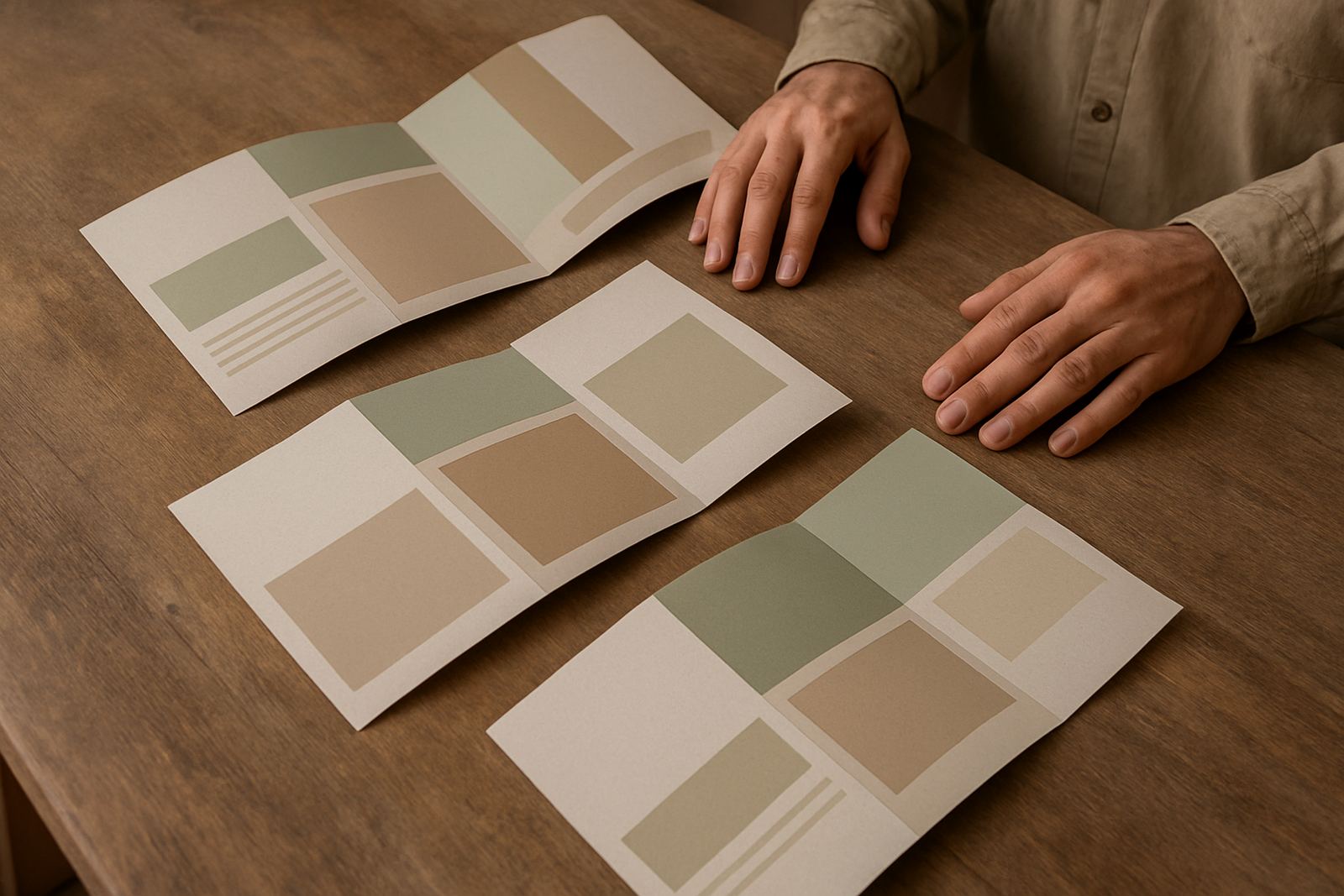
A useful brochure order for a North West printing and branding business usually follows this pattern: who you are, what you do, what makes you suitable, where you work, and how the customer can enquire. That order reads naturally and helps the buyer move through the page without effort.
Crystal Clear Printing serves Rustenburg and the surrounding area with printing, embroidery and signage work for mines, schools and businesses. From business stationery and stickers to flags, gazebos, branded clothing and PPE, the content should always lead with the most useful information first. When a brochure is structured in that way, it does a better job of turning interest into actual work and keeps the message clear for people with busy schedules.
In practical terms, a good brochure is not about saying more. It is about saying the right things in the right order and making each line earn its place.