
What the Paardeplaats team needed
The brief came from a field services crew working across Bojanala, with the main office in Rustenburg and travel into nearby mining and industrial areas. They wanted teamwear that looked consistent on site, made supervisors easy to identify, and held up through hot days, load-shedding delays and rough washing cycles. The order had to be practical first, with a clean finish second.
The team asked for golf shirts for daily wear and caps for sun protection. Because the staff move between yard work, vehicle inspections and client visits, the garments needed to feel light enough for long shifts but firm enough to carry embroidery without puckering. The client also wanted one colour story across all staff, so the crew would look coordinated when they arrived at a site gate or a municipal meeting.
Materials, colours and branding setup
We set up the project around a workwear-safe fabric choice and a simple branding layout that would reproduce clearly at scale. The golf shirts were specified in breathable poly-cotton blend fabric, with a collar and placket that stayed neat after repeat wear. Caps were selected in a structured six-panel style with a firm front so the logo would sit straight.
The embroidery files were cleaned up and digitised for production, then sized so the left chest mark would read clearly from a short distance without becoming heavy on the garment. The cap branding was kept slightly smaller to suit the curved front panels. We also tested thread colour against the shirt base to make sure the mark stayed visible in bright North West sun and in indoor lighting at depots and workshops.
- Golf shirts in bulk sizes for mixed staff allocation
- Caps matched to the same branding colour for a consistent look
- Left chest embroidery positioned for easy identification
- Thread choice matched to the shirt fabric and cap panels
Production challenges we had to work around
Workwear projects like this are rarely only about print or stitch. The challenge was consistency across a larger batch, with enough stock in the right sizes and a finish that remained even from the first garment to the last. We also had to plan around the team’s shift pattern, because they needed the order ready without interrupting active field work.
Another constraint was the mix of use cases. Some garments would be worn in dusty outdoor areas, while others would be used for office-facing visits and client handovers. That meant the branding could not be too large or flashy. It needed to look professional in a meeting room and still make sense on a hard hat site or at a loading point. We kept the layout plain, practical and easy to read.
- Staggered size allocation to reduce wastage
- Artwork checked for thread movement and stitch density
- Branding kept tidy for both site and office use
- Production scheduled around the client’s working hours
How we supplied and finished the order
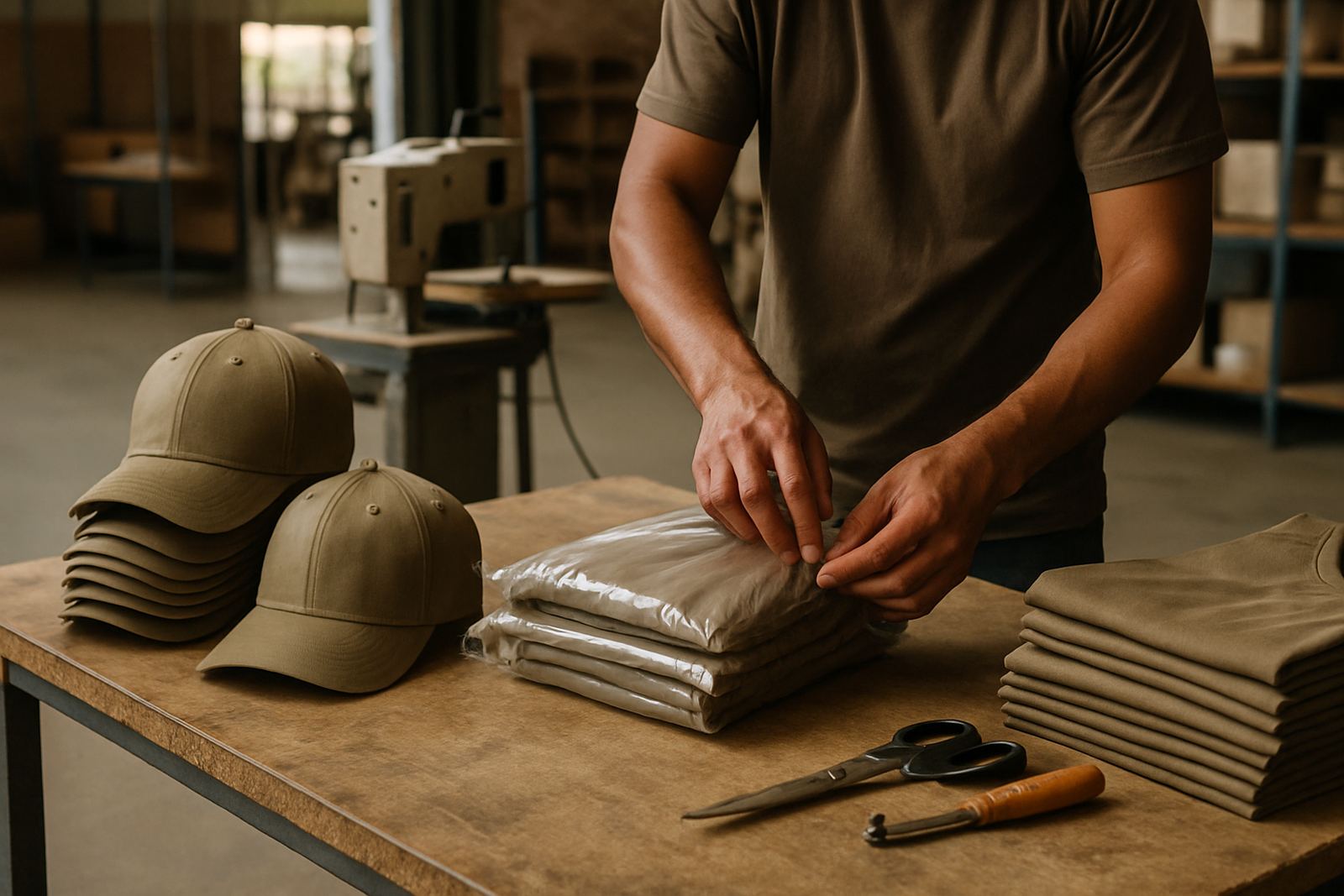
We handled the full run from artwork setup through embroidery and final packing. The shirts were prepared first, then the cap panels were stabilised before stitching so the logo would not distort. Each item was checked after branding for thread tails, alignment and size accuracy. Where needed, we trimmed and rechecked before packing for dispatch.
The order also needed sensible handover notes so the client could issue garments by size and role. We packed the teamwear in a way that made distribution simple, which matters when a crew is split between sites and not all staff report to one place at once. The final finish was neat and durable, with the embroidery sitting cleanly on the fabric rather than pulling it out of shape. A small but important detail, and it saved time on the issue day.
Because this was a bulk order, we kept the production line steady and checked repeat pieces against the approved sample. That consistency helped us avoid colour drift and size mix-ups, which can be a problem when larger teams need kit in one go.
Timeline from approval to delivery
The full project ran over two weeks from artwork approval to delivery. Week one covered garment confirmation, digitising, stitch testing and approval of the sample set. Week two covered full production, finishing, packing and release for delivery into the Rustenburg area.
This schedule worked well for a team that needed the garments before a new round of site visits. It also gave enough time to correct any small issues before the full batch was run. When a job includes both embroidery and bulk sizing, rushing it usually costs more later, so we kept the pace practical and predictable.
- Week 1: brief, artwork setup and embroidery sample approval
- Week 2: bulk production, finishing and packed handover
- Delivery timed to suit the client’s operations schedule
What the team got out of the project
The result was a clearer, more professional look for the crew across site visits and day-to-day operations. Staff could be identified quickly, and the branded clothing gave the team a more settled appearance when dealing with clients, suppliers and checkpoints. It also made issue control easier for the client, because each person had a defined garment set instead of mixed, unmarked items.
From our side, the project confirmed what works best for teamwear in the North West: simple branding, durable fabric, and a production plan that respects actual working conditions. The shirts and caps were fit for repeated use, and the order held together well through embroidery, packing and handover. If we were repeating this kind of job again, we would keep the same approach: approve a sample early, lock in sizes before the full run, and keep the logo placement conservative so it stays neat in the field.
Key facts
| Project type | Bulk golf shirts and caps for a regional field services team |
|---|---|
| Location | Rustenburg, North West |
| Core services used | Artwork Setup, Embroidery Digitising, Garment Embroidery, Delivery and Setup |
| Branding method | Left chest embroidery on shirts and front branding on caps |
| Timeline | 2 weeks from approval to delivery |
| Use case | Daily site wear, client visits and supervisor identification |